



kallipolis
Know thyself
A rather explosive discussion on Hot Topics on the matter of Circumcision has prompted a JUB member to invite me to offer a few words on why Christians have rejected the circumcision tradition of their Jewish elder cousins.
The origins of infant circumcision within Israel are traceable to Abraham as a sign of The Covenant between God, and those who serve his will. This is a complete story for another day. Fast forward to the time immediately following the crucifixion of Jesus of Nazareth.
How free are Christians to dispense with precepts and laws that once boasted biblical and, therefore, divine warrant?
For purposes of brevity I propose to limit the focus of my offering to Paul's Letter to the Galatians. Galatians is likely to be one of the earliest, if not the very first of Paul's letters and, perhaps the very earliest text in the New Testament. Written sometime around 50 AD Galatians affords us a window onto Christianity's emergence from its Jewish root.
Galatians specifically addresses both the issue of circumcision and the Abraham story (Genesis 17) upon which the divine command to circumcise is based. In this Letter, we see one of the founding fathers of Christianity struggling to reinterpret sacred scripture in the light of his new-found faith in The Christ.
In Galatians, we find Paul vehemently defending his gospel and his right as an apostle to preach this gospel among the Gentiles against accusations to the contrary advanced by opponents who were advocating "a different gospel."
The content of the Letter seems to imply that this other gospel entailed faithful adherence to the Mosaic Law (3:10), including circumcision (5:2-4; 6:12-13), as well as the observance of the Sabbath and the Jewish feast days (4:8-11).
Beginning with Galatians 3:26, Paul makes extensive use of familial language, recognising his Gentile converts as "children of God" (3:26; 4:6-7), "children of Abraham" (3:7) "children of the promise" and "children of freedom" (3:7). By bringing together the Abraham story and Law-free theology in this manner Paul effectively radicalises the familial metaphors so deeply embedded in the Jewish tradition to embrace the Gentiles, who were never formerly considered family members. A status that was considered the sole preserve of the circumcised elect of Israel was, according to Paul's reading of the Abraham story, granted to uncircumcised Gentiles.
Paul's tactic was to separate what his opponents' gospel no doubt held together, Abraham's faith (Gen 15:6) and his Law-observance (Gen 17:10-11). Arguing that God's promises were to Abraham's seed ( Gen 12:7; 13:15; 17:7; 24:7), a singular form that he interpreted as referring to Christ (Gal 3:16), Paul could assert that it was through faith in the seed of Abraham, not through Law-observance expressed via circumcision, that Gentiles were made the children of Abraham. Not only was this a highly innovative interpretation, it must also have been read as offensive and polemical to the Law-observant.
Even sacred scripture can be reinterpreted in the light of the lived experience of the communities of faith.
So, why do Christians no longer practice circumcision? Paul answers that question by suggesting that the death and resurrection of Christ has brought about a "new creation" (Gal 6:15; cf. 2 Cor 5:17). Hence, a new covenant has been wrought in Christ's blood and it supplants the old covenant mediated to Moses via angelic messengers. While the first covenant was sealed in the flesh via circumcision, the new covenant was written in the Spirit, and those who adhere to the first are enslaved to the flesh, as opposed to the new covenant which brings freedom and liberation.

An icon depicting Paul of Tarsus preaching in Athens
Do we seek our redemption by wearing "badges" of allegiance(circumcision), or trying to fulfil legalistic obligations?
Paul advises us that once we go down that path, we are forced to surrender our adult responsibility, and revert to an infantile mentality (cf. Gal 3:25).
Paul equates this legalistic mentality with a form of slavery (5:1). Moreover, relying upon infantile point-scoring and uncritical law-keeping robs the death and resurrection of Christ of its salvific significance. Who needs Christ, if one can earn God's favour by one's own efforts?
The origins of infant circumcision within Israel are traceable to Abraham as a sign of The Covenant between God, and those who serve his will. This is a complete story for another day. Fast forward to the time immediately following the crucifixion of Jesus of Nazareth.
How free are Christians to dispense with precepts and laws that once boasted biblical and, therefore, divine warrant?
For purposes of brevity I propose to limit the focus of my offering to Paul's Letter to the Galatians. Galatians is likely to be one of the earliest, if not the very first of Paul's letters and, perhaps the very earliest text in the New Testament. Written sometime around 50 AD Galatians affords us a window onto Christianity's emergence from its Jewish root.
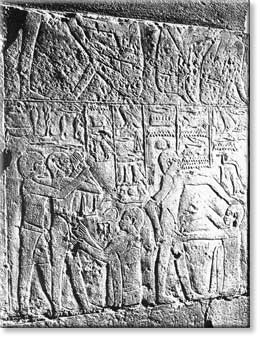
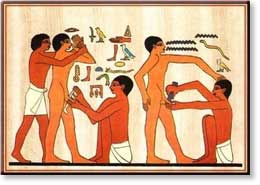
A photograph of the Egyptian relief (above) illustrating the circumcision of two adolescent boys in the Sixth Dynasty tomb of the royal architect Ankh-ma-hor at Saqqara and below a modern graphic representation of the relief.

Galatians specifically addresses both the issue of circumcision and the Abraham story (Genesis 17) upon which the divine command to circumcise is based. In this Letter, we see one of the founding fathers of Christianity struggling to reinterpret sacred scripture in the light of his new-found faith in The Christ.
In Galatians, we find Paul vehemently defending his gospel and his right as an apostle to preach this gospel among the Gentiles against accusations to the contrary advanced by opponents who were advocating "a different gospel."
The content of the Letter seems to imply that this other gospel entailed faithful adherence to the Mosaic Law (3:10), including circumcision (5:2-4; 6:12-13), as well as the observance of the Sabbath and the Jewish feast days (4:8-11).
Beginning with Galatians 3:26, Paul makes extensive use of familial language, recognising his Gentile converts as "children of God" (3:26; 4:6-7), "children of Abraham" (3:7) "children of the promise" and "children of freedom" (3:7). By bringing together the Abraham story and Law-free theology in this manner Paul effectively radicalises the familial metaphors so deeply embedded in the Jewish tradition to embrace the Gentiles, who were never formerly considered family members. A status that was considered the sole preserve of the circumcised elect of Israel was, according to Paul's reading of the Abraham story, granted to uncircumcised Gentiles.
Paul's tactic was to separate what his opponents' gospel no doubt held together, Abraham's faith (Gen 15:6) and his Law-observance (Gen 17:10-11). Arguing that God's promises were to Abraham's seed ( Gen 12:7; 13:15; 17:7; 24:7), a singular form that he interpreted as referring to Christ (Gal 3:16), Paul could assert that it was through faith in the seed of Abraham, not through Law-observance expressed via circumcision, that Gentiles were made the children of Abraham. Not only was this a highly innovative interpretation, it must also have been read as offensive and polemical to the Law-observant.
Paul's creative reworking of the Abrahamic traditions serves to remind us that even the members of the earliest communities of the Christian faith understood that scripture does not have the final word on faith practice. Authority lies not solely with scripture; but with the community and its living tradition.
Once again, we see that, contrary to some more conservative views of the immutability of Church doctrine, beliefs and practice do undergo development and redefinition.
Even sacred scripture can be reinterpreted in the light of the lived experience of the communities of faith.
So, why do Christians no longer practice circumcision? Paul answers that question by suggesting that the death and resurrection of Christ has brought about a "new creation" (Gal 6:15; cf. 2 Cor 5:17). Hence, a new covenant has been wrought in Christ's blood and it supplants the old covenant mediated to Moses via angelic messengers. While the first covenant was sealed in the flesh via circumcision, the new covenant was written in the Spirit, and those who adhere to the first are enslaved to the flesh, as opposed to the new covenant which brings freedom and liberation.
An icon depicting Paul of Tarsus preaching in Athens
Do we seek our redemption by wearing "badges" of allegiance(circumcision), or trying to fulfil legalistic obligations?
Paul advises us that once we go down that path, we are forced to surrender our adult responsibility, and revert to an infantile mentality (cf. Gal 3:25).
Paul equates this legalistic mentality with a form of slavery (5:1). Moreover, relying upon infantile point-scoring and uncritical law-keeping robs the death and resurrection of Christ of its salvific significance. Who needs Christ, if one can earn God's favour by one's own efforts?
For Paul of Tarsus circumcision is a response to scripture's invitation to advertise ones submission to The Covenant, rather than an act of free will that leads the faithful person into a quid pro quo relationship, whereby God, and the faithful person relate to one another as loving partners devoted to serving one another's needs.
A mutilated penis is hardly evidence of our love for our lover. end
I extend my best wishes to our Jewish cousins for a happy, and festive Hanukkah.
A mutilated penis is hardly evidence of our love for our lover. end
I extend my best wishes to our Jewish cousins for a happy, and festive Hanukkah.


