The Original Gay Porn Community - Free Gay Movies and Photos, Gay Porn Site Reviews and Adult Gay Forums

  • Welcome To Just Us Boys - The World's Largest Gay Message Board Community

    In order to comply with recent US Supreme Court rulings regarding adult content, we will be making changes in the future to require that you log into your account to view adult content on the site.
    If you do not have an account, please register.
    REGISTER HERE - 100% FREE / We Will Never Sell Your Info

    PLEASE READ: To register, turn off your VPN (iPhone users- disable iCloud); you can re-enable the VPN after registration. You must maintain an active email address on your account: disposable email addresses cannot be used to register.

  • Hi Guest - Did you know?
    Hot Topics is a Safe for Work (SFW) forum.

Does Remembrance Day mean anything to people any more?

rareboy

coleos patentes
50K Posts
Joined
Dec 4, 2006
Posts
121,428
Reaction score
32,955
Points
113
image.jpg

When I was very young, it was a holiday...later, it was a half day and then it was an hour at the cenotaph and then back to classes and then it was a moment of silence during classes.

All the WWI vets are gone and most of the WWII vets are frail and fewer and fewer.

North Americans are largely divorced from memories of sacrifice on an horrific scale and of course, we see the rise of nationalism and fascism in many countries.

Do you do anything on Remembrance Day? Stop for a moment of reflection? Listen to a favourite song?

 
No.
We do not treat it as one special day. One day in which we take the gratitude from out of the cupboard, put in on the mantlepiece for a few hours and then put it away until next year.
The enormity of the debt that we owe to past generations is so vast that one day is not enough, it is so vast that it is everpresent, everyday. No speeches and displays can be anything more than teacups in the ocean.
Two simple words. Never again. It is heartbreaking to see how many people cant even remember two simple words.
 
No, we don't do anything special for veteran's day. We do honor Memorial Day with a flag.
 
The problem with Veteran's Day in the U.S., which evolved from Armistice Day, is that, like the poem "In Flanders Field", it invariably becomes a call to arms, so to speak. It doesn't decry the waste and folly and greed of war, but the glory. The dead in the poem are not calling out so much for their valor as their cause, and cursing those who do not take up the fight.

And there cannot be any more pointless war than the Great War. And in WWII, almost 80% of the American force fought in Europe, not protecting the U.S., but recovering Europe. Only 20% fought in the Pacific, where Japan was never a threat to the U.S. except for empire.

In the U.S., all patriotic holidays become a celebration of the military. Those who serve become beatified, not for sacrifice, but for imputed valor that may never have been. MANY enlist because they have no other job prospects and are impoverished, hence the larger minority representation. Once in, there is a significant element of corruption, waste, and in some cases, abuse of the vast bureaucracy that is the U.S. military.

And, as those soldiers leave the service, they often take privileged status in federal employment and in the large military industrial complex, leading to ongoing ethics and corruption problems there in many instances.

True valor and sacrifice should be commemorated, but as a motive to demand better decisions of our leaders. Worshipping uniforms is an inappropriate attribution of honor. We never worship teachers, and they sacrifice far more than the average enlisted soldier.

 
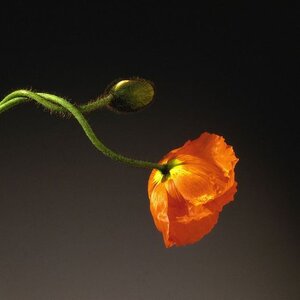
I returned a few days ago from 2 1/2 weeks in the UK, where I observed many--in some places, most--people wearing red poppies. A veterans relief charity sells paper and plastic poppies, but other people wear felt, knitted or enameled brass ones.

Knowing I was going to be there during the Remembrance period, I brought along the enameled poppy the Dorchester Hotel in London gave me when I was staying there for a design conference in 2019. On Remembrance Sunday during that visit, I walked down to St James's Park and watched the march of soldiers, many of them mounted, returning to the Horse Guards from the Cenotaph where earlier at 11 AM the Queen and Prime Minister had placed wreaths, followed by the firing of cannons. It was all very impressive and moving. That evening, I attended a performance of Mozart's Requiem at St John's Smith Square--my favorite place for a concert in the city.

During our recent visit--we were in London, Leicester and Stamford--and also Cambridge and York attending academic seminars--my partner and I observed that most of the people wearing poppies were 40+. And very few were worn by people who weren't white.

As many of you will know, the Armistice began on the 11th hour of the 11th day of the 11th month. On Remembrance Sunday, while having a late breakfast at the Ritz, all conversation ceased at 11:00, and all remained silent for two minutes. I found this quite moving. The prior evening, we had dinner with old clients of mine who moved last year from Los Angeles to London (150-year lease on a 4-story house on Eaton Square in Belgravia, no less!). They were planning on attending a Remembrance performance of Mozart's Requiem at Royal Albert Hall the following evening and mentioned that in 2023 they were at the Cenotaph to witness the laying of the wreaths.

The next day, Monday the 11th, we were in the Virgin Lounge waiting for our return home flight to Los Angeles. Just as we had experienced at our hotel, everyone became silent at 11:00. Again, I found this quite moving. One of our fellow passengers in the lounge--a Yank who lives in Cambridge--mentioned that classes from the primary school his daughters attend there visited one of the many war memorials in the town and that his younger daughter had cut out paper poppies in class. He said he was pleased that they knew some of the history of World Wars I and II, and the importance of Remembrance Day.

These experiences are very different from what I've observed and experienced here in the US, where Veteran's Day seems to be more an opportunity for a three- or four-day weekend than an opportunity to honor and reflect.
 
I returned a few days ago from 2 1/2 weeks in the UK, where I observed many--in some places, most--people wearing red poppies. A veterans relief charity sells paper and plastic poppies, but other people wear felt, knitted or enameled brass ones.

Hardly anyone where I live has worn a poppy in the last few years. Those of us who do tend to be elderly. When I was a child we all wore one, it was expected of us. The collection boxes were in all the shops, the library, the Post Office, but now you have to forage to find one. Perhaps it's not a cost-effective method of fundraising any more.

If I remember rightly the nationwide two minutes' silence on 11 November was discontinued for some years in the 1980s/90s. The government thought it was a nuisance having everyone stop dead in their tracks while they were at work since there is already two minutes' silence at 11 am on Remembrance Day (second Sunday in November). They were wrong though and it was reinstated by popular demand. The climax of the Festival of Remembrance on the day before Remembrance Sunday is the shower of poppies, which also takes place in silence.


The problem with Veteran's Day in the U.S., which evolved from Armistice Day, is that, like the poem "In Flanders Field", it invariably becomes a call to arms, so to speak. It doesn't decry the waste and folly and greed of war, but the glory.

That's interesting. I'd no idea Veterans' Day was a jamboree, I assumed it was a day for solemn reflection like it is here. Looking it up on Wikipedia just now I read that Kurt Vonnegut also deplored the razzmatazz:

Armistice Day has become Veterans’ Day. Armistice Day was sacred. Veterans’ Day is not. So I will throw Veterans’ Day over my shoulder. Armistice Day I will keep. I don’t want to throw away any sacred things.

There's a link to this article from 2018.

But is it marked differently in different states? I know there's also Memorial Day in May, is that a solemn occasion?
 
A table was set up in the lobby of the Grand Hotel in York (formerly headquarters of the Great Northern Railway) where one was invited to take a paper and plastic poppy and make a donation. My partner and I already had poppies, so we made a donation. Just about everyone at the hotel was wearing a poppy regardless of race and age. I glanced at a headline on a newspaper in the lounge about Jacob Rees-Mogg criticizing the quality of the poppies this year, and that he thought they looked better without the leaf.

In answer to Essex Boy's question, while there are solemn ceremonies in Washington, D.C., no one pays much attention or even knows the significance of these days.
 
That's interesting. I'd no idea Veterans' Day was a jamboree, I assumed it was a day for solemn reflection like it is here. Looking it up on Wikipedia just now I read that Kurt Vonnegut also deplored the razzmatazz:


There's a link to this article from 2018.

But is it marked differently in different states? I know there's also Memorial Day in May, is that a solemn occasion?
A Jamboree is a bit overstated, but it nonetheless is a glorification of valor, rather than a regret we still have wars. EVERY national patriotic holiday just serves as another day to pay homage to soldiers. We do owe our soldiers honor and respect, but patriotism is far more than militarism, but not in the U.S.
 
The problem with Veteran's Day in the U.S., which evolved from Armistice Day, is that, like the poem "In Flanders Field", it invariably becomes a call to arms, so to speak. It doesn't decry the waste and folly and greed of war, but the glory. The dead in the poem are not calling out so much for their valor as their cause, and cursing those who do not take up the fight.

And there cannot be any more pointless war than the Great War. And in WWII, almost 80% of the American force fought in Europe, not protecting the U.S., but recovering Europe. Only 20% fought in the Pacific, where Japan was never a threat to the U.S. except for empire.

In the U.S., all patriotic holidays become a celebration of the military. Those who serve become beatified, not for sacrifice, but for imputed valor that may never have been. MANY enlist because they have no other job prospects and are impoverished, hence the larger minority representation. Once in, there is a significant element of corruption, waste, and in some cases, abuse of the vast bureaucracy that is the U.S. military.

And, as those soldiers leave the service, they often take privileged status in federal employment and in the large military industrial complex, leading to ongoing ethics and corruption problems there in many instances.

True valor and sacrifice should be commemorated, but as a motive to demand better decisions of our leaders. Worshipping uniforms is an inappropriate attribution of honor. We never worship teachers, and they sacrifice far more than the average enlisted soldier.


I remember as a kid, growing up during the Vietnam War era, and seeing the opposition that developed to the continuation of a pointless conflict. That experience has colored my view of war, the military, and the celebration of conflict. The one thing that seems to be missing from the Veteran's Day and Memorial Day commemorations is the memory of the death and horror of those who lost their lives, and the admonition to work hard to avoid the repeat of the useless loss of lives in the future.

The U. S. Government always claims they are acting to protect American interests, but have you noticed those interests are always those of the wealthy elites? Going back to the horror of war, it would seem that we would go to war only as a last resort, but the reason we still have wars is that the world's leaders value what they can get from war over maintaining peace. One lesson from Vietnam was that it is far easier to get into a war than to get out of one. That lesson was lost on the G. W. Bush administration that invaded Iraq and Afghanistan, condemning the United States to two long and costly wars, and destabilizing Southwest and Central Asia. And have you noticed that in every war, the politicians that get us into those wars stand to personally benefit from the conflict, by having stock or other ties to the contractors that make the weaponry?

Yes, I believe that we should value our military and those who serve. But one of the best ways we can honor them is to protect them by electing officials who work to avoid war, and do not get us into unnecessary conflicts.
 
Yes, I believe that we should value our military and those who serve. But one of the best ways we can honor them is to protect them by electing officials who work to avoid war, and do not get us into unnecessary conflicts.
On of the subtle changes that occurred as we abandoned Armistice Day for Veteran's Day, is that the focus moved from the dead to the dead and living. Veteran's Day is used by employers to honor members of the military, not veterans of war. Big difference. The same happens locally in civic observances. Instead of honorinig those who served in battle, it's merely those who ever served in the military.

Again, I'm for honoring service, especially sacrificial service, but enlisting in a military career and being paid a salary is not a sacrifice unless it puts one in harm's way. We honor those who serve, but there should be a specific honor for those who fought and died, no matter how meaningless or imperial the cause may have been.

And, because Independence Day, 9-11, Pearl Harbor Day, D Day, VE Day, and all the others just become "honor soldiers" days, it really makes us just a nation that perpetually elevates our military. If we spent half that attention on education and science, we'd have a better nation. Instead, we glorify military power and warfare. Our kids aspire to have the power and respect that Special Ops guys get. It's a warmongering.
 
On of the subtle changes that occurred as we abandoned Armistice Day for Veteran's Day, is that the focus moved from the dead to the dead and living. Veteran's Day is used by employers to honor members of the military, not veterans of war. Big difference.
I agree with this... "We remember those who accepted the possible burden of harm for a defined service contract, and then retired young to go golfing while posting spicy letters to the editor on their local news web site" is very different than "My grandfather died in the fight to kill Hitler and my mom was raised by her aunt and uncle because grandma couldn't really cope."

However, fighting Hitler isn't the gloficiation of warfare in my books, it's a tragic necessity that most of a brave generation faced up to. Is it only the shift to any service members that you object to or does the more original form of remembrance also trouble you?
 
No, I have no objection at all to remembrance, although we do seem to romanticize WWII now, and it carries the trappinngs of faded glory.

I'm not sure we should have gone to war in Europe the second time, and certain we never should have in the Great War. I simply do not believe the Germans could have held the entirety of Europe as the Romans or Greeks or Turks did. Warfare had changed too much, and the Russian front proved Germany had not thought out her strategy far enough. With that vast an empire, it would be inevitable that we and others could supply resistance forces until they broke up the Reich.

We're literally a planet away. Our lower 48 has not been invaded in over 200 years, and is still unlikely to considering the nuclear deterrent. But we see ourselves as the children of Europe, so we keep looking east.

But what is done is done, and when one's country does give the call to arms, right or wrong, our sons and daughters deserve the praise for answering. In peacetime, also, but less of a to-do if they are never called to battle.

By entering the second great war, we laid the foundation for our dilemma today, to be called upon as a policing force, a Great Power. This has continued to this day, with Europe still looking to us to be the bulwark against China and Russia. That has contributed to a hypermilitarized economy.

Of course, we are not without blame. Our meddling in China led to our conflict with Japan, as they had their own plans to exploit the weakness on the continent.
 
I didn't even notice that the Royal British Legion's Festival of Remembrance was on telly this evening. It's the first time I've ever missed it. Also I've been in London all day, walking about quite a bit, and it just occurs to me I never noticed one person wearing a poppy.

Southend pier has been lined with crocheted poppies from end to end (about 1⅓ miles). I might go down and take a look on Tuesday (Armistice Day).
 
It's less of a thing in the USA. But the hockey commentators for NHL national broadcast in the USA, who are based in Atlanta, all wore poppies on this week's broadcast. Yes.
 
One consequence of the MAGA takeover of government is the corrosion of the honor of the military.

Setting up a Foxite partisan drunkard as the Secretary, proposing to change the DoD to the War Department, deploying National Guard to invade cities under a sham declaration of emergency, the bombing of civilian ships in international waters, and the demand for a free press to swear not to publish content critical of the Pentagon -- all these serve to create rising disrespect for our armed forces.

It is no coincidence that the last time we saw this degree of disaffection was during Nixon's term in office.

And it cannot be laid to the feet of Donald J. Trump. The faction that backs him clearly has the power to demand better at the Pentagon, to stop the military deployments, to speak up against the illegal acts, yet the GOP sits silent. The GOP is the source of the degradation. The GOP refuses to behave patriotically, Constitutionally, honorably, and have raised a Golden Calf in the place of patriotism.

And, as a result, we Americans may all perish in the wilderness.
 
Back
Top