The Original Gay Porn Community - Free Gay Movies and Photos, Gay Porn Site Reviews and Adult Gay Forums

  • Welcome To Just Us Boys - The World's Largest Gay Message Board Community

    In order to comply with recent US Supreme Court rulings regarding adult content, we will be making changes in the future to require that you log into your account to view adult content on the site.
    If you do not have an account, please register.
    REGISTER HERE - 100% FREE / We Will Never Sell Your Info

    PLEASE READ: To register, turn off your VPN (iPhone users- disable iCloud); you can re-enable the VPN after registration. You must maintain an active email address on your account: disposable email addresses cannot be used to register.

Healthcare going forward

Insurance cannot cover preexisting illnesses. Healthy people cannot afford to bear the burden of the people already sick.

By that token, people whose house never burns down can't afford the burden of people whose houses burn down. Or drivers who never have an accident can't afford the burden of those who get into an accident. Or those who pay tens of thousands of dollars in professional liability insurance can't afford the burden of the people who end up with claims.

The depths of your cluelessness about the nature of insurance never fail to amaze me.
 
By that token, people whose house never burns down can't afford the burden of people whose houses burn down. Or drivers who never have an accident can't afford the burden of those who get into an accident. Or those who pay tens of thousands of dollars in professional liability insurance can't afford the burden of the people who end up with claims.

The depths of your cluelessness about the nature of insurance never fail to amaze me.

His mental gymnastics are not something be admired.
 
If it exempted the first half million per child up to three of a person's estate from seizure after death, I'd go for it. As it stands, though, I know someone who ended up homeless after her mother died because they'd relied on Medicaid for assistance, and I'm facing the same situation unless I can get a certification of permanent and total disability.

Better to start Medicare at age 55 and for everyone significantly disabled.

Yes, I saw that proposal made too and I liked it as well, the change in the overall health of the various risk pools actually make that a win/win proposition.
 
Look again. I said that charity is the only way that preexisting illnesses can be covered. Insurance cannot. But I did not advocate an expansion of Medicaid. It is available to those who do not have assets.

Only governmental payments can pay for the huge cost of preexisting illnesses. That charity is the function of Medicaid.

I'm sorry but that seems to read to me that only government payments can cover the cost and that Medicaid was the tool. I would agree with that sentiment if you improve the tool to do the job properly.
 
So I've been reading some of the commentary and analysis of the House Bill that passed. The general opinion is the Republicans in their zeal to pass something have managed to cobble together a bill that is the WORST of all worlds. It does not actually repeal Obamacare and it manages to break all of Trump's promises on what Trumpcare was going to look like. It will not make Healthcare better. Given the overall unpopularity of the law, if it passes in anything like its current form the full negative impacts of it will be becoming apparent just in time to devastate the Republican party in the midterms. For the Republicans, this bill is a lose/lose situation.

What happens now is:
1. The Senate lets the bill die in committee and we return to the status quo.
2. The Senate not wanting to be the ones blamed for failing to pass healthcare reform makes some tweaks and passes the law. This is the worst outcome for Republicans who will likely lose the House in the midterms as fall out.
3. The Senate either guts the current bill and rewrites it from scratch or passes their own healthcare bill and sends it back to the House to reconcile. This is probably the best chance to avoid disaster for the Republicans if they can craft some real reform.

So based on what we are hearing from the Republican leadership in the Senate, they are going for option 3. They make it quite plain that the bill cannot pass in its current form and are not even going to try and bring it to the floor.
 
By that token, people whose house never burns down can't afford the burden of people whose houses burn down. Or drivers who never have an accident can't afford the burden of those who get into an accident. Or those who pay tens of thousands of dollars in professional liability insurance can't afford the burden of the people who end up with claims.

The depths of your cluelessness about the nature of insurance never fail to amaze me.

No it is you who fail to understand. Suppose you call an insurance company and say; "my house is on fire, so now I want to buy an insurance policy. I will pay you a few hundred dollars for the first premium and you can build a new house for me". Can you see something wrong with that?
So instead you call the health insurance company and say: "I have not needed health insurance before, but now I heed a coronary by pass. I will pay a few hundred dollars for the first premium and you can pay for my $150,000 operation."
Insurance companies insure against risk, insuring healthy people and charging premiums based on the statistical probability that some will become ill in the next year.
But none of this works if the company undertakes to "insure" people who are already ill. It is not a matter of risk, but of certainty. If that expense is passed to other insureds, they must pay that burden on top of the premium based on their own risk. Who could afford it? How compute the premium? Who can guess how many people with huge expenses will want policies? And why would any healthy person buy insurance if he can wait until he is sick?
 
No it is you who fail to understand. Suppose you call an insurance company and say; "my house is on fire, so now I want to buy an insurance policy. I will pay you a few hundred dollars for the first premium and you can build a new house for me". Can you see something wrong with that?
So instead you call the health insurance company and say: "I have not needed health insurance before, but now I heed a coronary by pass. I will pay a few hundred dollars for the first premium and you can pay for my $150,000 operation."
Insurance companies insure against risk, insuring healthy people and charging premiums based on the statistical probability that some will become ill in the next year.
But none of this works if the company undertakes to "insure" people who are already ill. It is not a matter of risk, but of certainty. If that expense is passed to other insureds, they must pay that burden on top of the premium based on their own risk. Who could afford it? How compute the premium? Who can guess how many people with huge expenses will want policies? And why would any healthy person buy insurance if he can wait until he is sick?

All good points which are why no other 1st world nation tries to do things the way Americans do. You protest against the various socialized, single payer and other national health care systems but when it comes to dealing with these very issues in a balanced way, they work.
 
By that token, people whose house never burns down can't afford the burden of people whose houses burn down. Or drivers who never have an accident can't afford the burden of those who get into an accident. Or those who pay tens of thousands of dollars in professional liability insurance can't afford the burden of the people who end up with claims.
One modification to this scenario...

Pre-existing condition was seldom used proactively by the payers. It was almost always used retroactively.

So, in your auto accident scenario, it would be like you being in an accident where you were injured. Your hospital bill was $250,000. After receiving the bill, the auto insurance company then requests your driver record from the State and they find that you were in an auto accident 20 years ago. They then retroactively cancel your insurance and deny your current claim because you had a pre-existing accident.

Anything can be a pre-existing condition. Your physicians have you sign a "Release of Information" document that allows your insurance company to request your records without your knowledge or specific consent. If you get cancer, your insurance company might request those records and assign them to a reviewer. If they were to find a positive HIV test or that you were on a medication as a child that was associated with cancer, they can deny your claim citing a "pre-existing condition". Because their "reviews" were usually triggered after diagnosis with a serious illness or after a medication was prescribed for prevention of a recurrence, the patient is left uninsured.

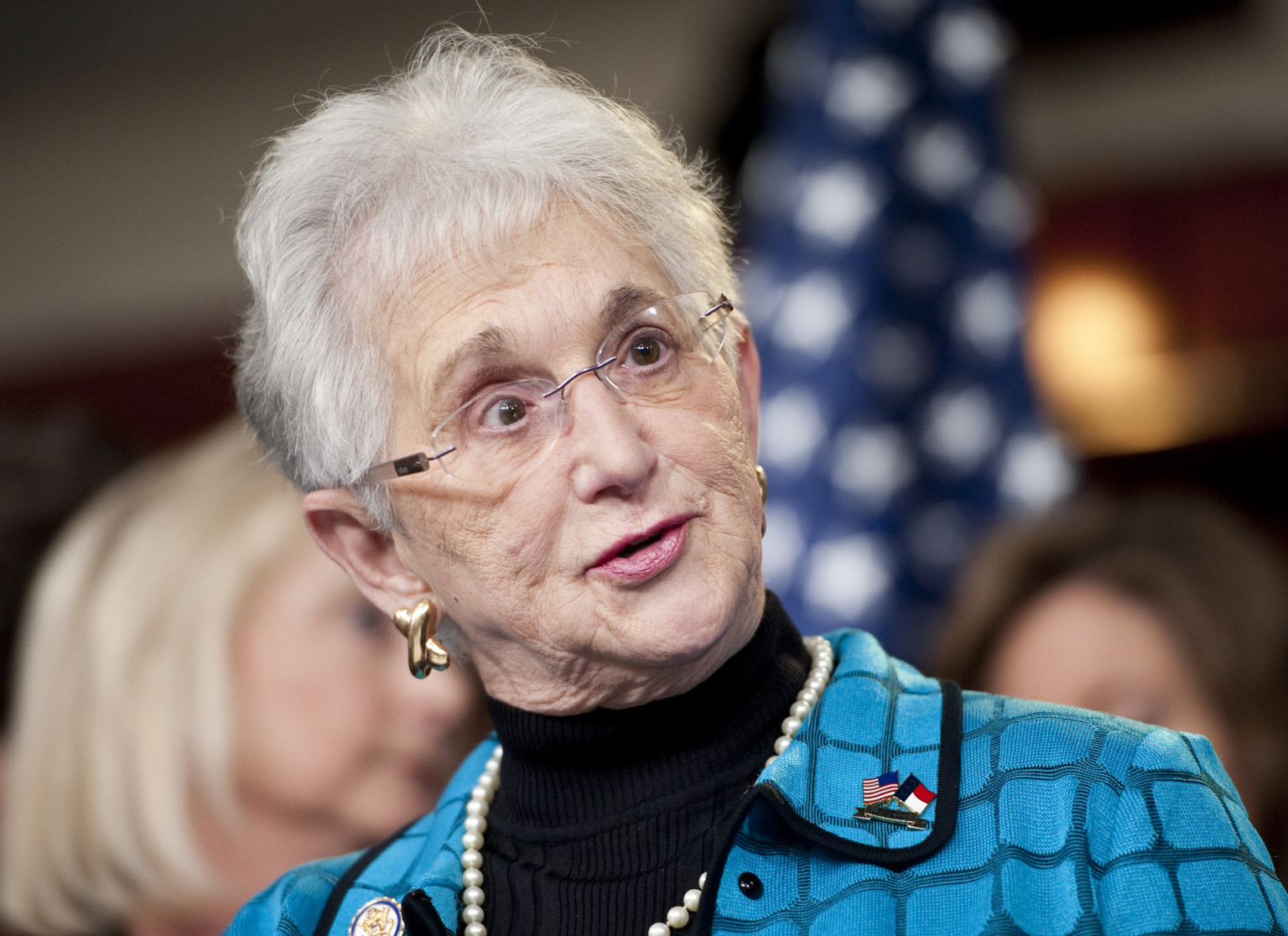
Something that got lost in the flurry of regular repeal that the Republican Congress has been busy with while Trump keeps everyone distracted is a bill that one of my favorite Congresspersons, Rep Virginia Foxx of North Carolina, slipped under the radar. Thanks to Mrs Foxx's efforts, if you refuse to submit and provide genetic testing results to your employer, your employer has the right to increase your insurance premiums. By providing your DNA testing results to your employer, you will open new possibilities for pre-existing conditions that you didn't even know you had.

Meet Mrs Foxx:

o-VIRGINIA-FOXX-facebook.jpg
 
One modification to this scenario...

Pre-existing condition was seldom used proactively by the payers. It was almost always used retroactively.

So, in your auto accident scenario, it would be like you being in an accident where you were injured. Your hospital bill was $250,000. After receiving the bill, the auto insurance company then requests your driver record from the State and they find that you were in an auto accident 20 years ago. They then retroactively cancel your insurance and deny your current claim because you had a pre-existing accident.

Anything can be a pre-existing condition. Your physicians have you sign a "Release of Information" document that allows your insurance company to request your records without your knowledge or specific consent. If you get cancer, your insurance company might request those records and assign them to a reviewer. If they were to find a positive HIV test or that you were on a medication as a child that was associated with cancer, they can deny your claim citing a "pre-existing condition". Because their "reviews" were usually triggered after diagnosis with a serious illness or after a medication was prescribed for prevention of a recurrence, the patient is left uninsured.

Something that got lost in the flurry of regular repeal that the Republican Congress has been busy with while Trump keeps everyone distracted is a bill that one of my favorite Congresspersons, Rep Virginia Foxx of North Carolina, slipped under the radar. Thanks to Mrs Foxx's efforts, if you refuse to submit and provide genetic testing results to your employer, your employer has the right to increase your insurance premiums. By providing your DNA testing results to your employer, you will open new possibilities for pre-existing conditions that you didn't even know you had.

Meet Mrs Foxx:

o-VIRGINIA-FOXX-facebook.jpg

The insurance application asks about preexisting conditions, and if the company accepts the policy those conditions will not be a defense. If the applicant fails to disclose a prior condition which later becomes a problem, the company can void the policy. In litigation the company would have to show the condition not disclosed was directly related to the later one and that the policy would not have been issued if the disclosure was made. Sometimes a policy is issued with an exeption for the disclosed condition.
 
No it is you who fail to understand. Suppose you call an insurance company and say; "my house is on fire, so now I want to buy an insurance policy. I will pay you a few hundred dollars for the first premium and you can build a new house for me". Can you see something wrong with that?
So instead you call the health insurance company and say: "I have not needed health insurance before, but now I heed a coronary by pass. I will pay a few hundred dollars for the first premium and you can pay for my $150,000 operation."
Insurance companies insure against risk, insuring healthy people and charging premiums based on the statistical probability that some will become ill in the next year.
But none of this works if the company undertakes to "insure" people who are already ill. It is not a matter of risk, but of certainty. If that expense is passed to other insureds, they must pay that burden on top of the premium based on their own risk. Who could afford it? How compute the premium? Who can guess how many people with huge expenses will want policies? And why would any healthy person buy insurance if he can wait until he is sick?

You don't have to have your body on fire to call to get it insured.

129 million people have a pre-existing condition. With proper pro-active medical management, the costs of treatment can be minimized or even avoided. Without it, these conditions can result in catastrophic care which will be provided at the expense of the public.

As someone who knows how healthcare works, I know which direction I would recommend America take.

Face it.

The repeal was a naked tax giveaway to the wealthiest in the country. The bill is even written that way.

I also hope that one day, you will experience first hand the heavy hand of your private health care system and that while it cures whatever ails you...it leaves you sleeping in a cardboard box.
 
You don't have to have your body on fire to call to get it insured.

129 million people have a pre-existing condition. With proper pro-active medical management, the costs of treatment can be minimized or even avoided. Without it, these conditions can result in catastrophic care which will be provided at the expense of the public.

As someone who knows how healthcare works, I know which direction I would recommend America take.

Yeah but will end up being at the expense of the increasingly few who pay all the federal income tax, with more beneficiaries coming in every day, legally or illegally.
 
IMHO, we would have been soooo much better off if Obama had gone for a single-payer system, (which seems to work pretty well in dozens of other countries.). He, like the Clinton's in the 90's, decided that such an idea was too radical, too socialist to be accepted and so opted for complicated, government/private, half-measures systems with everyone having a snout in the trough, which only succeeded in making almost no one happy.
 
If the applicant fails to disclose a prior condition which later becomes a problem, the company can void the policy. In litigation the company would have to show the condition not disclosed was directly related to the later one and that the policy would not have been issued if the disclosure was made.
Horse-puckey.

They will cheerfully rescind coverage for the 47-year-old guy with cancer, because they find that he failed to disclose that he had acne in his teenage years.
 
No it is you who fail to understand. Suppose you call an insurance company and say; "my house is on fire, so now I want to buy an insurance policy. I will pay you a few hundred dollars for the first premium and you can build a new house for me". Can you see something wrong with that?

Yes. EVERYthing. That is the stupidest analogy you've ever concocted in that brain of yours. It's not the same as someone who has a life-threatening condition. Now, tell us What Are They Supposed To Do? DIE!
 
Horse-puckey.

They will cheerfully rescind coverage for the 47-year-old guy with cancer, because they find that he failed to disclose that he had acne in his teenage years.
No, acne is not a preexisting condition of the later cancer. The company could not legally rescind for that reason.
 
IMHO, we would have been soooo much better off if Obama had gone for a single-payer system, (which seems to work pretty well in dozens of other countries.). He, like the Clinton's in the 90's, decided that such an idea was too radical, too socialist to be accepted and so opted for complicated, government/private, half-measures systems with everyone having a snout in the trough, which only succeeded in making almost no one happy.
Well, not exactly. Dropping the public option was a negotiating point to get private insurance companies to support the legislation.

One of the problems with the ACA was the year that was spent getting various special interest groups to support the legislation. In order to get the insurance lobby on board, they dropped its biggest competition: a government insurance program that would have provided better cost control, lower premiums and better coverage than the offerings of the big payers like BCBS, United Healthcare, Cigna, etc.

If there's anyone to blame for killing the public option, it's Max Baucus and Jim Messina. Remember Ted Kennedy was expected to push the legislation in the Senate. When Kennedy was diagnosed with terminal brain cancer, Baucus became the major player. Baucus had received millions in donations from the insurance industry and many of his former Senate aides went to work in the insurance industry.
The overall health and insurance sectors haven’t just been kind to Baucus’ staffers, but they’ve also aided his campaigns handsomely over the years, especially in his barely contested 2008 reelection campaign. In 2008, Baucus received $1,148,775 from the health sector and $285,850 from the insurance sector. For his career he has received $2,797,381 from the health sector and $1,170,313 from the insurance sector.

It wasn't covered much at the time but there was a protest in one of the Senate hearings where liberal activists interrupted the proceedings to protest the fact that the public option wasn't being considered. Baucus had them arrested.

Further reading:
 
IMHO, we would have been soooo much better off if Obama had gone for a single-payer system, (which seems to work pretty well in dozens of other countries.). He, like the Clinton's in the 90's, decided that such an idea was too radical, too socialist to be accepted and so opted for complicated, government/private, half-measures systems with everyone having a snout in the trough, which only succeeded in making almost no one happy.

I would note that the reason that single payer works in Canada is because it is the responsibility of each province as well as the Feds.

Canada also moved to VAT to fund its obligations in health in addition to personal and corporate income tax, which effectively means that all citizens contribute to the pool.

The US couldn't even shift to single payer at this point if it wanted to. It can only expand Medicare and try to broaden the risk pool to the greatest extent possible.

The US could develop the public option...but ....nah....that just ain't gonna happen in a country run by the banking/insurance complex.

It just isn't.

Ever.

Going.

To.

Happen.
 
Back
Top