The Original Gay Porn Community - Free Gay Movies and Photos, Gay Porn Site Reviews and Adult Gay Forums

  • Welcome To Just Us Boys - The World's Largest Gay Message Board Community

    In order to comply with recent US Supreme Court rulings regarding adult content, we will be making changes in the future to require that you log into your account to view adult content on the site.
    If you do not have an account, please register.
    REGISTER HERE - 100% FREE / We Will Never Sell Your Info

    PLEASE READ: To register, turn off your VPN (iPhone users- disable iCloud); you can re-enable the VPN after registration. You must maintain an active email address on your account: disposable email addresses cannot be used to register.

  • Hi Guest - Did you know?
    Hot Topics is a Safe for Work (SFW) forum.

Pick your perfect dog breed

gsdx

Festina lente
JUB Supporter
50K Posts
Joined
Oct 10, 2003
Posts
57,249
Reaction score
1,622
Points
113
Location
Peterborough Ontario
Over 200 breeds listed with measurements in both metric and imperial: http://ca.lifestyle.yahoo.com/pets/dogs/section/breed-guide/1

Here's a sample:

Retriever (Golden)

Provided by: Dogs in Canada, Dogs in Canada

Origin:
The most glamorous of the retriever family, the Golden was developed in the mid-19th century by a Scotsman, Sir Dudley Majoribanks, later Lord Tweedmouth. The romantic story that first unfolded concerned Sir Dudley visiting a circus and being so taken with a troupe of Russian sheepdogs that he bought them all. But when his breeding records were made public, they revealed the Golden was all sporting blood. It had been created by crossing the wavy-coated Retriever with the yellow Tweed Water Spaniel. The offspring were crossed with the Irish Setter and the sandy-coloured Bloodhound. Linebreeding finally created the Golden. It was first granted breed status in Britain in 1913. Among the most ingratiating of breeds, the Golden's manners win friends for him wherever he's seen.

Temperament:
Just about any colour is acceptable, but hound colours are preferred, being predominately white and black with tan trim, white and black, or white and tan. However, red, orange, lemon, blue or blue with or without the tan trim are also approved as long as there's at least a minimal patch of white on the body.

Activity Level:
A powerful and active dog, the Golden does well in suburban or country environments where he gets lots of outdoor exercise, but keep him well-fenced for his own protection.

Height/Weight:
Strong and upstanding males measure from 23-24 in (58-61 cm) at the shoulder and weigh from 65-75 lb (29.5-34 kg). Females are somewhat smaller.

Coat:
The dense and water-repellent coat lies flat against the body and may be straight or wavy. It is firm and resilient. There's moderate feathering on the back of the forelegs and heavier feathering on the front of the neck, back of thighs and underside of tail.

Colour:
It's golden, of course, but in various shades of gold.

Grooming:
Regular brushing is the only grooming required outside of the occasional bath.
 
I don't have a favourite but I do have one of these:

Jack Russell Terrier
Provided by: Dogs in Canada, Dogs in Canada
Origin:
(in Canadian Kennel Club Miscellaneous Class) The Reverend Jack Russell (1795-1883) of Devonshire, England, was as devoted to fox hunting as he was to his church activities. He improved on a strain of working terriers to develop a dog purely for hunting the British fox. His foundation was his first terrier, 'Trump,' bought from a milkman in Oxford. The good Reverend wanted a terrier with legs of sufficient length to be able to keep up with the horses and a dog small enough in chest to follow the fox through narrow crevices and flush it from its den.

Temperament:
Loyal and affectionate, the Jack Russell Terrier is keen, alert and always ready for sport.

Activity Level:
Jack Russells can match any cat in their ability to catch mice and other varmints. They are game, hardy dogs that may be happy lounging on the couch but would be happier working in the field.

Height/Weight:
The breed comes in two sizes: Unders, 10-12 in (25-30 cm) and Overs, 12-14 in (30-36 cm).

Coat:
Jack Russells may be smooth or broken (rough) coated.

Colour:
The breed may be white, white with black or tan markings or white with a combination of these colours.

Grooming:
Either coat is relatively easy to groom.

I love her lots and lots :D
 
We have been into Labrador's for the last 25 yrs. They are one of the best loyal, loving, smartest,sportyest, fun, cool dogs to have...|

It's been number 1 breed for many years now and best family pet dog.:=D:


We have 2 a Black Male-- Dakota

and a Yellow Female---Abbey.

if we go to the beach we have to go in the water to get Dakota out as he will not come in from chasing balls sticks and body surfing.

He actually goes under water to fetch.(!)

Really fun dogs..
 
Ah dogs, too many breeds for one man's love, but I try hard.

My absolute favourite breed is a little common and unexciting, but I love and respect them to bits. (Though I have several dog breeds vying for my top spot)


German Shepherd Dog

Origin:
One of the most versatile and talented breeds in the world today, the German Shepherd Dog has been valued in police work, tracking, guiding the blind, drug and bomb detection, search and rescue, herding, avalanche rescue and so much more. In the 1890s, Captain Max von Stephanitz, a German cavalry officer, envisioned a superb and versatile herding dog and began a breeding program made up of the best German farm dogs available. He succeeded beyond all expectations. The German Shepherd Dog first came to North America in the early 1900s and got a huge boost in popularity here after World War I when Rin Tin Tin's movie exploits captured the attention of the public.


Temperament:
The well-bred German Shepherd Dog is stable, sensible, intelligent, quick to learn, loyal and protective of his home and property. Unfortunately, because of the breed's popularity, the German Shepherd Dog has been exploited by some unscrupulous and irresponsible breeders. It's a good idea to be extremely selective when choosing a puppy.


Activity Level:
A breed of exceptional stamina, the German Shepherd Dog was initially bred to trot all day long. Though relatively calm and quiet indoors, this breed needs lots of outdoor exercise to maintain condition.


Height/Weight:
The ideal height for adult males is 25 in (64 cm) at the shoulder and weight ranges from 75-85 lb (34-39 kg). Females will be somewhat smaller.


Coat:
The breed's outer coat is dense, straight, short and close. There is a soft undercoat.


Colour:
German Shepherd Dogs may be black-and-tan, varying shades of sable or all black.


Grooming:
Regular, thorough brushing is necessary.
 
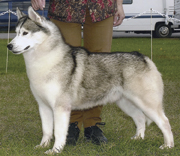
Siberian Husky
siberian-husky.jpg

Provided by: Dogs in Canada, Dogs in Canada
Origin:
The nomadic Chukchi people of northeastern Siberia used a medium-sized working dog to pull their sleds and herd reindeer. In their isolated region, with no other dogs to crossbreed, the Chukchis mated the best of their dogs to each other and the type bred pure and true for over 3,000 years. Noted for its ability to pull light loads over great distances at moderate speeds, the breed caught the attention of a fur trader and explorer by the name of Olaf Swenson, who brought the first of the breed to the U.S. Shortly after the turn of the last century, Siberians raced in the All-Alaska Sweepstakes for the first time. A team of Siberians driven by a Norwegian, Leonhard Seppala, won the big Alaska race in 1915, '16 and '17. In the winter of 1925, Seppala drove one of several teams, which, running in relay, gained international prominence as the heroes that delivered serum to avert a diphtheria epidemic in Nome, Alaska. The serum run served to bring the breed to the attention of the public and a personal-appearance tour by Seppala and his team made friends for the breed from coast to coast.

Temperament:
The typical Siberian Husky is both friendly and gentle, with an outgoing personality and an eager, happy disposition.

Activity Level:
The Sibe is an active breed that prefers the outdoors and needs lots of regular exercise.

Height/Weight:
Males range from 21-23.5 in (53-60 cm) at the shoulder and weigh up to 60 lb (27 kg). Females stand from 20-22 in (51-56 cm) and weigh 34-50 lb (15.5-22.5 kg).

Coat:
The breed sports a thick double coat consisting of a soft and downy undercoat and a medium-length outer coat of soft, smooth texture.

Colour:
All colours and white are allowed, as are all markings. Most common are various shades of wolf and silver-grey, red or black with white points.

Grooming:
Thorough, regular brushing is required.

Huskies have always been my kind of dog...
 
Given the chance, I'd go for a GWP:

Pointer (German Wire-haired)

Origin:
There's no doubt the German Short-haired Pointer was (and is) a versatile sporting dog but German sportsmen wanted to go one better. Their aim was to produce a dog with all the versatility of the GSP but aggressive enough to be used in hunting dangerous game in rugged locales. What breeds were added to the GSP remains a matter of speculation. Some believe the Airedale was added to the gene pool while others claim it was the ancient Poodle or the Griffon. Whatever the ancestry, the German Wire-haired Pointer emerged as a classic pointer with more nerve but less speed than the GSP and with a tough coat to protect him under the worst of conditions.


Temperament:
A loyal and affectionate companion that is eager to please, the GWP has a sound, reliable temperament. He may be aloof to strangers, but not unfriendly.


Activity Level:
The breed is an energetic and determined hunter with a courageous nature. He adapts well to suburban or country homes as a family pet and weekend hunting companion. He requires lots of exercise and is happiest when outdoors and working.


Height/Weight:
Males measure 24-26 in (61-66 cm). Females may be smaller but not less than 22 in (56 cm).


Coat:
The harsh, wiry, weather-resistant coat is also somewhat waterproof. It is long enough to protect against rough cover but not too long to obscure the dog's outline. The bushy eyebrows, beard and whiskers give the GWP a most appealing appearance.


Colour:
The coat may be solid liver, liver roan or liver-and-white often spotted with ticking and roaning.


Grooming:
Frequent brushing keeps the coat lying close and removes dead hair. Ears should be checked and cleaned as necessary
.
 
Here's my favorite---he has the softest bark I've ever heard.

attachment.php
 

Attachments

  • Picture0105.jpg
    Picture0105.jpg
    25 KB · Views: 654
As a kid I had a spanish cocker spaniel and later a pekingese. Now I have a german shepherd who I love vewy vewy much. !oops!

I named her Billie after Billie Holiday, got her from a co-worker who had puppies.

l_644ec1770063534d461024d4861a197b.jpg


l_513c6eb275ac26361a339961337ba46b.jpg


l_630f2eaab5e6d6c3eaf1439478a84da2.jpg


PS: I dunno who that black man is taking pics with my dogs but that's my Billie. :wink:
 
I like pound dogs. Mongrels are the best.
 
As a kid I had a spanish cocker spaniel and later a pekingese. Now I have a german shepherd who I love vewy vewy much. !oops!

I named her Billie after Billie Holiday, got her from a co-worker who had puppies.

OMG, a medical miracle
 
I have a mutt that I rescued from the shelter. Black lab mix. But if I were to get a pure breed:


Beagle
Provided by: Dogs in Canada, Dogs in Canada
Origin:
Though the earliest references to Beagles were in 15th-century writings, there are those who believe this breed harks back to 400 BC when similar small hounds were used for hunting by the ancient Greeks. Beagles are thought to have descended from dogs brought from France at the time of the Norman Conquest in 1066. The most accepted explanation of the name relates it to the Celtic word beag, meaning small. Rabbit is the chief quarry for Beagles used for hunting.

Temperament:
An endearing family pet with a warm personality, the gentle Beagle is especially good with children. Having been worked in packs, they tend to get along well with other dogs.

Activity Level:
True scent hounds, Beagles will inevitably follow their noses if an inviting odour leads them away so they should be kept in securely enclosed areas or exercised on lead for safety's sake. A breed of incredible stamina, daily outdoor exercise is a must for the Beagle.

Height/Weight:
For field trialling and conformation shows, Beagles are divided into two classes - 13 in (33 cm) and under, or over 13 in (33 cm) but under 15 in (38 cm).

Coat:
The Beagle wears a close, hard hound coat of medium length.

Colour:
Any true hound colour or combination of colours is acceptable.

Grooming:
A weekly rubdown with a hound mitt will suffice.
 
The Shih Tzu, without a doubt. Intelligent. Hypoallergenic. Beautiful.

I love the bitches!
 
rottweiler.jpg


Origin:
Beef to feed the Roman legions travelled 'on the hoof' and the soldiers used mastiff-type dogs to drive and guard the cattle on the journey across Europe. Some were left behind to guard outposts established along the way. One of these was in the community of Rottweil, Germany, which became the centre of a cattle-producing area. There, the mastiff-type dogs interbred with local herding dogs to become a strong breed known as 'the butcher's dog of Rottweil' because the dog wore his master's money on his collar on the way to market and drove the cattle home on the return trip. When mechanized transport threatened to put the breed out of work, the Rottweiler might have disappeared had it not been for an interest in preserving rare and unusual breeds. The rediscovered Rottweiler proved useful in many other ways such as a police dog, a war dog and the consummate protection and guard dog.

Temperament:
The Rottie is a fearless dog that maintains an air of self-assurance. He is basically calm and confident. He possesses an inherent desire to protect home and family.

Activity Level:
Willingness to work is bred into the Rottweiler. The well-bred Rottie is a devoted family dog. Due to his size, he does best in a suburban or country atmosphere where he can get lots of safe, outdoor exercise. Early obedience training is a good idea.

Height/Weight:
Adult males will measure 24-27 in (61-69 cm) in height with females in the range of 22-25 in (56-64 cm).

Coat:
The Rottie wears a straight, coarse, dense, medium-length outer coat with a softer undercoat present on the neck and thighs.

Colour:
The colour is always black with rich tan or mahogany markings.

Grooming:
Regular, thorough brushing is needed.
 
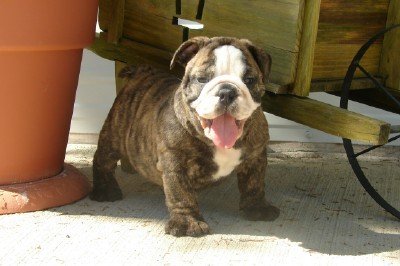
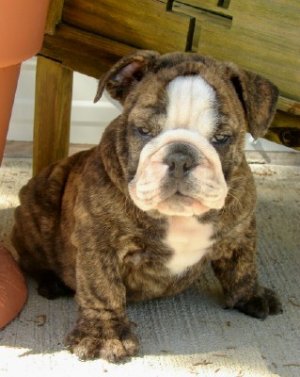
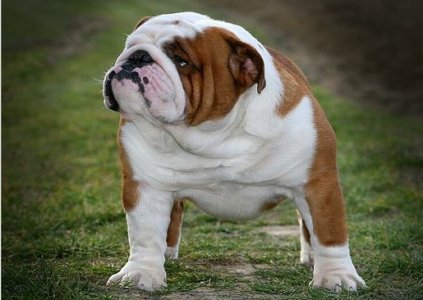
English Bulldog. Stubborn as hell but loving dogs. Just have to put up with the chuffing and farting!
 

Attachments

  • image.jpg
    image.jpg
    42.9 KB · Views: 57
  • image 2.jpg
    image 2.jpg
    52.5 KB · Views: 35
  • dad 2.jpg
    dad 2.jpg
    149.6 KB · Views: 37
Back
Top