The Original Gay Porn Community - Free Gay Movies and Photos, Gay Porn Site Reviews and Adult Gay Forums

  • Welcome To Just Us Boys - The World's Largest Gay Message Board Community

    In order to comply with recent US Supreme Court rulings regarding adult content, we will be making changes in the future to require that you log into your account to view adult content on the site.
    If you do not have an account, please register.
    REGISTER HERE - 100% FREE / We Will Never Sell Your Info

    PLEASE READ: To register, turn off your VPN (iPhone users- disable iCloud); you can re-enable the VPN after registration. You must maintain an active email address on your account: disposable email addresses cannot be used to register.

  • Hi Guest - Did you know?
    Hot Topics is a Safe for Work (SFW) forum.

A Controversial Topic

I pointed this out somewhere in the beginning of this thread, but it was not replied to. I don't think it was the point of the the thread anyway. The point here seemed to something more like, "I like science. This is some stuff I learned and this stuff is just how it is. If you're offended by these words then you are wrong and probably don't like or understand science. You should like science.".

This is actually pretty accurate. I was reading the other thread posted recently about correlations between testosterone and homosexuality, and felt that a lot of people were all up in arms, saying that the science is evil and it should just leave us homosexuals alone.
Which I found to be ridiculous.

My point was to say that, there is this research, and it is not bad; it is great, and we should embrace it.

That is what I was trying to say.
 
We're natural but we're not normal?

What about homosexuality would not be considered 'normal' genetic traits when we're entirely natural?

Natural as in they occur randomly and on their own without intervention, like rain. Rain is natural. But rain every day for 6 months would not be normal in my part of the world.

Thus, homosexuality may be as natural as rain; but at on occurrence between 1-4% (or whatever it is) it certainly is not the norm.

You're assuming homosexuality is an inheritable trait via reproduction. You're disregarding genetic mutation and genetic drift. Many genetic traits are identified that have nothing to with reproductive fitness yet still pass on. We've just mapped the genetic code and we don't understand it completely.

Heterosexual couples create homosexuals all the time. There is nothing wrong or disordered with our reproductive systems. We can choose to procreate if we wish. Since homosexuals continually exist, we can assume that the genetic trait is either activated by some form of mutation or drift or it is in fact a desirable trait. Genetic fitness is not simply who can reproduce the most. It's more than that.

Agreed on all points. However if it is an inheritable trait (even if caused by a mutation in 1 generation, that mutation could be passed on to the next one), most of us are not reproducing. If it is a desirable trait, how can it survive?

You're implying that homosexuality is a genetic disorder?

You said that classifying homosexuality as 'wrong', 'defective', or 'disordered ' is acceptable.

Ignoring the sheer bigotry in this post, what proof do you have homosexuality is a genetic illness on par with Sickle cell anemia or down syndrome?

I don't. I'm going with current thinking which, as I understand it, seems to be along the lines of nature as opposed to nurture; that is, there is a large inherent aspect to homosexuality which is built-in as opposed to learned or "developed" (for want of a better word), even though the nurture part of it might stimulate the nature part of it.

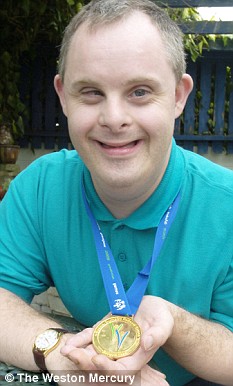
Thus, you're saying that since we're 'wrong', 'disordered' and 'defective', homosexuals are really no different from this guy:
article-1031397-01D4FC8800000578-354_233x386.jpg

Wow, you have so missed the point.

Any given difference between people, or peoples, could be related to genetic differences. Not every mutation results in retardation or sickle cell anemia (and for the most part go undetected). For example it has been speculated that a difference in genes coding for red blood cell proteins might make oxygen delivery to muscle tissue better in Kenyans and Ethiopians than in other people and might account for their superior performance in long-distance running. No solid evidence as yet, I don't think, but that's hardly a hideous deforming and debilitating mutation. Nevertheless, it still might be defect in the gene somewhere in that the sequence is different to the normal sequence for that protein.

You're assuming that every single little misplacement in the 4 billion base-pairs which make up your average human is going to have catastrophic consequences and that is sorely, sorely mistaken. There are enough horrendous genetic conditions, granted, but even simple things like lactose intolerance and celiac disease are classified as genetic disorders - unpleasant but hardly lethal, I'm sure you'll agree.

-d-
 
OK, yeaaahhhh and blackbeltninja, you guys know the science. You can talk to each other and understand every word. We can't fucking understand you, and you alienate us with your politically freighted words. No use not meaning to, it happened.

Your scientific term "deviation" can be translated into the layman's term "variation," and the scientific term "unfit" can be translated to "counterintuitive." I could probably think of more alternative phrases if I set my mind to the task... "obscured utitility," I just thought of that.

Words really do matter, you see. You can say that your words are neutral until the end of time, but they just aren't, not in a layman's context. I can get over your use of those two words, but I ask you to consider your defense of them. They aren't necessary to your point (whatever your point was, I've quite forgotten... empty-headed, you know).

I see where you're coming from. Thing is, these are terms which are common to genetics and when they are used everyone discussing these things KNOWS what we're talking about. Would you like Panasonic and Sony to replace the word Volume on their products with "loudymaker"? Perhaps at first glance you didn't know what volume meant since it was a technical term and you were probably quite young, but now you know and look, the world hasn't ended. Is it worth streamlining the language and getting rid of a superfluous word like volume when we could use something more intuitive and everyday like loudness? I say no and I sincerely hope I've got you on my side here.

These terms have been in use since before the genetics of gay were ever considered and classifying something as "unfit" wasn't a PC issue. The thing you're asking is to rewrite the jargon and frankly I'm not entirely sure it's worth it.

Genetics is not my field of expertise, but I'd wager that there are enough differences between variation and deviation for them to mean specific, and different, things - like microfiction vs short stories, say. The take-home message for the average layman in the street is much the same: fairly short narrative, without giving a flying fuck for the intricacies and differences which distinguish the two, but they are two different ideas.

The terms you don't like are well understood enough and commonly used enough that rewriting the last 100 years' worth of genetic research articles to replace a few words which annoy a few people (who are interested in only a fairly small part of the field and in only a layman's way) with other, less inflammatory (to them) ones is a largely pointless exercise.

And nobody said you were empty-headed, either.

-d-
 
Hey, Guys. Y'all seem to be talking past each other. And, that is Swell's point.

The terms in question, "deviant" and "unfit", may well be neutral terms in the realm of science and statistics. But, your audience may not be understanding those terms in the same manner as those involved in science and statistics.

It's similar to my speaking fluent French, but if You don't understand the language, I'm not going to be able to successfully get my point across to you. So ... in order to effectively Communicate, I'd need to translate that language into something that we mutually understand. I'd need to use "common" language/terms which we both relate to similarly.

In order to disperse your information to the "General Public", you do need to use terms that they understand. You don't have to re-write millions of pages of research for the people involved in specific fields, but in order to effectively present it to those on the "outside", you do have to take into account they're understanding of the terms you choose to use.

It truly is quite important that the studies being discussed, here in a "Public" forum, be presented in a comprehensive style that the intended audience can easily comprehend/relate to, or the core purpose of the discussion will not be effectively achieved.

Just sayin' ...

Keep smilin'!! :kiss:(*8*)
Chaz ;)
 
Speaking for myself: no, I could not override my attractions and breed with a woman. I have 0% sexual attraction to women. It isn't about 'interest' or 'preference'.
I think what he meant is that we're physically capable of having sex with a woman and reproducing.

I don't understand what you mean by 'less fit'. How, by saying that by not reproducing, are we less fit? There is nothing to imply anything about fitness at all.
I think by "less fit" he means that we're unlikely or less likely to reproduce. It's one of those phrases that are used in science that don't always translate well into the everyday speech of laity.

Right. Homosexuality has been around forever, by all the evidence. It occurs repeatedly and without exception. This is why I think the term 'deviant' doesn't apply. It would be a deviant if it wasn't a constant. Do you disagree?
That's an interesting way to look at it and you're not wrong. If it's been a constant then, you're right, it hasn't deviated. I think in this context, however, it's meant that the norm is for people to not be heterosexual and so homosexuality is a deviation from that norm.

And it isn't the scientific aspect that bothers me. Like you, I'm fascinated by it. The problem is what one/society does with that information. Until we as a society separate sexual orientation from morality, I would expect the worst from many people in positions of power. That has been shown to be a constant as well. I have learned to never underestimate the power of a person's hatred.
I agree. I also think we need to learn to separate the sciences because they use the same words and phrases to describe different things in different contexts, and that leads to all kinds of problems. The biggest problems I've seen so far are people confusing the jargon of biology and genetic studies with the jargon of gender studies.
 
Would you like Panasonic and Sony to replace the word Volume on their products with "loudymaker"? Perhaps at first glance you didn't know what volume meant since it was a technical term and you were probably quite young, but now you know and look, the world hasn't ended. Is it worth streamlining the language and getting rid of a superfluous word like volume when we could use something more intuitive and everyday like loudness? I say no and I sincerely hope I've got you on my side here.
That's a perfect analogy...and it underlines what I'm saying.

I have a volume knob on my boombox stereo that has some numbers on it, 0 to 20. But that's not exactly accurate, my stereo doesn't go from 0 to 20 amperes or decibels or whatever it is that stereos do; Sony just took a random number and used that as a scale for the minimum to maximum available sound on that model.

I have, however, seen volume knobs on professional deejay equipment, marked with amperes and decibels, multiple knobs even, done up in decimals to the third place, and the whole display means nothing to me...all I know is louder and quieter, but this knob doesn't even indicate which way it's supposed to turn to make it do that.

Do I expect Sony to call the volume dial "loudymaker"? No, of course not. But I expect them to keep their decibel notations to themselves when they manufacture my boombox. And they do, because they know a customer alienated by technical exactitude is a customer who doesn't buy their product.

These terms have been in use since before the genetics of gay were ever considered and classifying something as "unfit" wasn't a PC issue. The thing you're asking is to rewrite the jargon and frankly I'm not entirely sure it's worth it.
Okay, I think this is where we're getting to the problem, which Kyanimal put his finger on above: I don't ask scientists to alter their jargon, any more than I would ask French people to speak English in France. I am asking that when you discuss these things with the general public, you look at the words that might piss people off, thereby having a deleterious effect on your message since we stop listening when we're pissed.

So to take another example, I am trained (though only slightly) in the discipline of critical analysis. In that discipline, you call any object you're analyzing a "text." It's a piece of jargon and in that world it means any object under review. But if I was talking to someone who'd never heard of critical analysis, and I referred to the Mona Lisa as a text, he'd look at me crazy. To most people, text is writing, not painting. And though text is a pretty neutral word, I would have lost credibility by using a word of jargon to someone who thinks of that word differently: he would think I was crazy, or he would think I was stupid, or he would think I was talking down to him; he would not think that what I was telling him about the Mona Lisa is true or worthwhile. Even if I explained to him the meaning of text as jargon, the credibility is gone.

And just there I used another piece of jargon: discipline. That's academic jargon for a field of study. But to most English-speaking people it means something quite different, and for many of us the specter of being whacked on the hand with a ruler in front of the whole class figures in the connotation. So shall the entire academic community stop using the word "discipline"? No, there would be no value in that. But you don't see colleges advertising their "disciplines" on TV and radio, as it would probably attract all the wrong crowd.

Jargon is an indespensible part of any facet of life, but jargon does not cross facets, and jargon is not for mass publication.

To review: There is no problem with geneticists using whatever idiotic phraseology they like, in their own papers and amongst themselves. When they talk to me, though, they need to euphemize those politically weighted words. Otherwise I will not listen, I will suspect their motives, and I will yell like a cat whose tail has been stepped on.

I'm sure they don't want that.

And nobody said you were empty-headed, either.
It was implied. But thank you for taking me seriously.:kiss:
 
Do I expect Sony to call the volume dial "loudymaker"? No, of course not. But I expect them to keep their decibel notations to themselves when they manufacture my boombox. And they do, because they know a customer alienated by technical exactitude is a customer who doesn't buy their product.

I'm going to disagree with you here.

On a car, you see 1.6i or GTS or VVTi or TDi and you either a.) don't know what they mean and ignore them, or b.) find out what they mean and get on with it. Likewise a computer - you need to have an idea why a 2.6GHz Celeron is not as highly rated as a 3GHz Core 2 Duo. If the numbers mean nothing to you - fine. But some of us don't live in a dumbed-down world and appreciate a bit of extra know-how, (or know-why might be a better turn of phrase) and can make better-informed decisions before we do things, like buying these items.

If you referred to the Mona Lisa as a text when talking to me, I'd ask why you called it that and thus learn something. I'd appreciate it far more than someone assuming I was incapable of grasping the concept that text means something else in that context and either coming off as patronising and/or condescending. If I were the expert in that scenario, I'd introduce the term text and quickly explain it to my audience in a line or two so we were all on the same page - it's something I'm used to as a scientist in a department full of medical people who don't know the stuff I do; and it's something they do when discussing things with us scientists who don't have a full medical background. We all learn something, we can all contribute to the discussion and nobody is left foundering out of his or her depth.

Jargon is an indespensible part of any facet of life, but jargon does not cross facets, and jargon is not for mass publication.

Okay, I'm kinda nit-picking here, but look at any catalogue or brochure advertising any audio/visual/computer/cellphone/technical anything or any Black Friday sale or any web-based advertising and you'll see that you're mistaken. HDMI, 1080p, FullHD, 3G, MMS, GPRS, DDR3, PMPO, s-ATA II - all visible, all over the place. Whether or not these tv/print ads and catalogues and whatever might be deemed as mass-publication is debatable, of course.

Either way, I suspect we have more vested interest in our own entertainment than genetics, so we are happy to be bombarded with jargon in that respect and take the time to find out what it means. But why should science be any different? If you want science aimed at grade-school kids, watch Brainiac on Discovery.

To review: There is no problem with geneticists using whatever idiotic phraseology they like, in their own papers and amongst themselves. When they talk to me, though, they need to euphemize those politically weighted words. Otherwise I will not listen, I will suspect their motives, and I will yell like a cat whose tail has been stepped on.

In short, if I could be so bold - you, the man in the street, are not worth it. We present our findings as is and hopefully that way they're less open to mis/interpretation. Anyone who does caterwaul about it is given an exasperated look and - much like in here - referred to the glossary of standard terms with an implied undercurrent advising them to suck it up. Then life just, you know, goes on.

I suspect if we got someone with more pizzazz to deliver our results people wouldn't get their knickers in nearly as many knots over these insignificant details.
338891.jpg


-d-
 
I fear we're picking apart the analogy and missing the point again.

Brass tacks: decibels, text, and megaherz are not offensive words in any facet of life. Deviant and unfit are offensive in many facets of life. They therefore require extra care in their usage.

That's the bottom line in what we're talking about here. I am offended--no, infuriated and insulted by these words, as are a number of the people who've posted to this thread and others. And telling me to man up and take it doesn't help me to understand whatever it is you're trying to get across, it just alienates me more; and I am not alone in this.

Language is never an insignificant detail. You and other science-oriented people have to consider if the use of these words is important enough to lose a huge chunk of your audience over. It's your message you're trying to communicate; which is more important, using the words you want or getting more people listening?
 
I don't have time for a more lengthy reply, so here's two points:

Science exists to broaden understanding.

Indeed. That's why it's so curious to see such half-hearted excuses for use of imprecise language that clouds issues rather than broadens understanding. When you use language that may be technically accurate but in practice is tainted, you are not broadening (or deepening) understanding, but diminishing it.


The entire field of biology and every subfield there out defines fitness as the ability to survive and reproduce.

Not so. As has been pointed out already, you're confusing genes with individuals. Fitness is the capacity for the genes to survive in successive generations. And individual reproduction isn't the only way that happens.

For just one very obvious example, look at bees, the vast majority of which will never reproduce (though their genes will succeed). Are you saying bees are not evolutionarily fit?
 
That's the bottom line in what we're talking about here. I am offended--no, infuriated and insulted by these words, as are a number of the people who've posted to this thread and others. And telling me to man up and take it doesn't help me to understand whatever it is you're trying to get across, it just alienates me more; and I am not alone in this.

Language is never an insignificant detail. You and other science-oriented people have to consider if the use of these words is important enough to lose a huge chunk of your audience over. It's your message you're trying to communicate; which is more important, using the words you want or getting more people listening?

To be absolutely honest with you, I don't care how many people are listening. I'm not conducting research for the popularity and the glamour of it. The people who need to be impressed with the work are the funding agencies and research committees which, thank G_d, are peppered with people who understand that "deviant" is inoffensive in this context and who will judge the research mostly on its merits and its significance and its impact on problems and its long-term usefulness and potential and feasibility and largely not on what people out there will think about it.

My own audience has numbered thousands; I've published papers and I've addressed the top guys in the field at the biggest and most significant conferences in the field. Not a single one of those people in those audiences has been the man in the street who might be offended by the term "unfit." Do I care if I lose the popular vote for my work amongst the rest of you? Nope; sorry. You're not funding me directly and you're not driving the research so I care about as much for your idiosyncrasies about the jargon as I care about what you're having for dinner tonight. Are you going to stop buying editions of Science, Nature, the European Molecular Biology Organisation Journal or Biochemical Pharmacology if the terms don't change? My guess is you're not buying them anyway.

This is not Hollywood - wet-bench science, the actual lab stuff as opposed to surveys and sociological research, doesn't have interest groups, test screenings and target audiences. Someone having a frothy over a word or two because they can't find the forest amongst all those pesky trees is not going to lessen the impact of what I've worked on, nor its significance in the field; additionally, as arrogant as it sounds, changing the words is not going to generate results (and thus papers, and thus funding) any faster.

Quite frankly, that is the bottom line.

-d-
 
I fear we're picking apart the analogy and missing the point again.

Brass tacks: decibels, text, and megaherz are not offensive words in any facet of life. Deviant and unfit are offensive in many facets of life. They therefore require extra care in their usage.

That's the bottom line in what we're talking about here. I am offended--no, infuriated and insulted by these words, as are a number of the people who've posted to this thread and others. And telling me to man up and take it doesn't help me to understand whatever it is you're trying to get across, it just alienates me more; and I am not alone in this.

Language is never an insignificant detail. You and other science-oriented people have to consider if the use of these words is important enough to lose a huge chunk of your audience over. It's your message you're trying to communicate; which is more important, using the words you want or getting more people listening?

I am not sure what kind of education you have, so I am just going to make this really basic. In high school, you take biology classes. And in those biology classes you read things out of your textbook, and you may even learn the terms "unfit" or "deviant" depending on how indepth your class is going to get. Now, in any text book, they eliminate the potential confusion of words like that by adding a little sentence after that says "which means...". I may not have added that sentence in my first post (I honestly don't remember) but I did clarify what those words meant, in my context, when I saw that there was some confusion.

I am sure that it is your gut reaction to hear "homosexuals are less fit" and "homosexuality is a deviant behavior" and instantly get ready to punch someone. Because, those words might sound a little harsh, on the surface.
BUT, you are an intelligent, cognitive human being. You are fully capable of reevaluation and thinking "Well, in this context those words are not offensive. I have no reason to be upset." That is what learning and education are all about.
I remember the first time I heard that humans evolved, and I was very offended. However, once someone sat down with me and explained what that meant, I decided that it wasn't so bad. And after that, when I heard that phrase (that humans evolved) I reminded myself that it wasn't a bad thing.

Now, sure, I could probably just use some other language here, and spare you the educational experience, but I am not going to do that. Why? Because, education is a beautiful thing. And maybe, just maybe, someday you will find yourself reading a more scientific paper, or article and read something about fitness, or deviant behaviors, and know what it is talking about.

Now, if after this you are still fervently against allowing yourself to learn a little about how science sees and phrases things, then I would like to respectfully suggest that you do not read my post, because apparently it is not meant for you.
 
I'm finding this thread absolutely fascinating! Unfortunately, it's not for the reasons that this discussion was originally started! #-o

This began as a presentation of Scientific studies concerning Homosexuality, but has "devolved" into a "fight" over Semantics! There are lessons to be learned, by both "sides", concerning the passage/sharing of Knowledge. And, we're discovering the difficulties/barriers of successfully attempting to do so! We've become mired in questions of effective Communication, vs. what the original intent was! ](*,)

To the "Science Guys" ... you are absolutely right that your terms are correct when presenting the information to those IN YOUR FIELD! However, in this forum, that is not your audience. And, therefore, to effectively convey your important information, you truly do need to take the use of certain terms into consideration. Otherwise, as we've so seen, your initial intent of conveying your findings is not going to succeed, thwarting the very purpose that was your initial intent.

"Laymen" ... in order to increase our understanding of what we are being presented, we often have to overcome our initial reaction to certain terms that we are not normally used to using in the same context. We need to "expand" our comprehension, objectively, in order to fully "process" the information being put before us.

It does not do, either "side", any good to dig in our heels, and insist on our own interpretations. Both "sides" need to work together to reach a Mutual understanding. If we don't do that, No One is going to be getting Anywhere!

That's just the way Communication works! And, if it's the purpose of Science to broaden understanding, effective Communication is, indeed, the bridge that must be crossed.

That being said ... no matter what ...

Keep smilin'!! :kiss:(*8*)
Chaz ;)
 
Sigh and shrug.

I just can't care anymore. It's making me tired. We're all talking around in circles. I've grasped your position and responded to it, and explained my position over and over again and...nothing.

You don't want to change your words, you want people to accept them with the definitions you've provided. I'm telling you that it's going to be difficult because those words are emotionally charged and will cause a reaction that is hard to overcome. But you consider that emotional reaction... what? Irrelevant? Unimportant? Whatever, you stick to your position that I and the rest of us who have this issue should just get over it. Fair enough.

I'm over it. Completely and totally over it. If I ever accidentally wander into another science thread, I'll hit the back button and forget about its existence. That won't affect anybody's funding, my distrust and disgust is not going to bring genetic biology to a grinding halt. You don't care what I think and why should you?

But I'm not the one who brought it up.

(PS: I have a typical American public high school education topped by a BA in English Language and Literature...but it was a long time ago)
 
Okay.

I felt bad about it as soon as wrote it, and I rewrote and rewrote and deleted and rewrote (just like writing a thesis, or a paper) and I knew at the end of the day there wasn't going to be a satisfactory result.

But you consider that emotional reaction... what? Irrelevant? Unimportant?

I consider it unnecessary, especially after it's pointed out that the terms are as old as the hills. Sure you have a right to be offended but it does seem these days that people go out of their way to be offended and frankly, it's tiresome. You've explained your position; we've defended our position. But there is no middle ground, because what would you deem a compromise? Changing it to your way is not a compromise.

We write a report or a proposal or a paper and it goes through endless edits and rewrites before finally everyone involved with it is happy with it, and that's just dealing with the scientists before submission - it still goes to reviewers and editors and gets revised a further several times before getting accepted and published (or rejected). Now after all that you want it rewritten again so as not to offend a layman - do you understand our frustration with what we perceive as overkill? It's a simple case of not being able to please everyone, so you please the most relevant of the people concerned.

I'm over it. Completely and totally over it. If I ever accidentally wander into another science thread, I'll hit the back button and forget about its existence. That won't affect anybody's funding, my distrust and disgust is not going to bring genetic biology to a grinding halt. You don't care what I think and why should you?

My mom would call this cutting off your nose to spite your face.

I've said before that I don't care how many people are reading my papers. But of course we care what you think, provided its an opinion on the work and not the semantics. I would be almightily fucked off if I were awarded a speaking slot at a prestigious conference and I presented some ground-breaking stuff and all anyone spoke about in the allotted 5-minute question time afterwards was my haircut.

Can I suggest that you continue to read the science threads for the take-home message (the one which is going to at some stage end up as two lines in a textbook abhorred by students which is in effect a condensation of several dozen papers comprising hundreds of thousands of work hours and millions of dollars in research money) and not stress over the really minor insignificant details. Think of it a bit like not letting the two or three very wooden scenes depicting the blossoming romance between Anakin and Padme in Star Wars eps II ruin the entire saga for you.

-d-
 
I was going to leave this alone, but I'm having one of my obsessive turns and I can't let go. So imagine if you will the following scenario:

EDITOR: "Swellegant, I need you to take out all the swear-words in your novel."

SWELLEGANT: "Swear words? Which ones?"

ED: "Fuck, ass, cock, shit, and rimming. Also all these long words nobody's ever heard of. What the hell is a susurration, anyway?"

SW: "It's a soft whispering sound. Why do I have to take them out?"

ED: "They're offensive to little old ladies who do most of their reading in doctors' offices."

SW: "But I'm not writing for old ladies in waiting rooms. My target audience is gay men."

ED: "But if I could get an excerpt into The New Yorker and multiply your audience by ten?"

SW: "What were those words again?"

See, the message is more important than the words. If changing some words spreads your message farther, it's worth considering. If changing the words changes the message, then one certainly shouldn't.

If you're writing for The Journal of American Biogenetics (or whatever), it doesn't matter to the subscribers of Reader's Digest whether or not you use words they understand or find offensive. You could write in Greek for all they care. But if you're releasing information to be published in Reader's Digest, it's important to consider how it will read to someone who isn't trained as you are trained, you want to consider if the words you're using spread or limit your message.

But like I said, if you're not writing to the general public there should be no reason to even think about it. However, somebody's writing to the general public, or I wouldn't have heard any of this in the first place; those are the people I wish would consider their language.

As to being easily offended... I guess I've simply swallowed too many insults in my life and am full up. No room for more, just gotta spit 'em right back out.

I try to be reasonable. If someone slaps me in the face, I will accept the explanation that he was just killing a mosquito for me. But my face still hurts, doesn't it. Some words you throw at me hurt just like a slap in the face; if the word wasn't meant hurtfully, I'll accept that (though grudgingly and with diminished trust); but it really doesn't help to be told I have no right to be hurt. I am hurt, and that's all there is to it.

Lots of people are like that.
 
^Effectively, an artist or writer worth his salt would call that scenario with your editor "selling out." But that's neither here nor there.

I'd like to offer this scenario:

Editor: We've printed 100 million copies of your book. They're going to sell like hotcakes everywhere except maybe northern Venezuela.

BBN: Why not northern Venezuela?

Ed: Oh, that font we printed it in? It was developed by a guy there. But then he betrayed his village to the druglords, so now the locals don't want anything to do with him or his stupid font.

BBN: Should we reprint it?

Ed: Personally, I believe the strength of the work should overcome any residual pettiness and that once people realise its brilliance and read the other rave reviews they'll overlook all those semantics. Oh look - a flying pig. Well, they'll eventually come around. Hopefully.

BBN: And if they don't?

Ed: You win some, you lose some. I remember people kicking up a fuss that Schindler's List was in black and white because they hate black and white films in this age of glorious technicolor. Those who refused to watch it, well, they lose out.

BBN: They must feel pretty foolish standing around the water cooler and telling everyone how they kicked up a colossal fuss over something which transcends simple personal preference. Doesn't it concern them that they're kinda missing the point?

Ed: True dat. High five!

***Fin***

As for the general public - you read that little weekly publication, Time? They don't dumb anything down - it's chock full of jargon. There's often, not always, a quick explanation when a term is introduced, but then BAM! right into the details with it being as technical as necessary and often very technical at that. It works for them, and near as I can tell it works for their readers without being science/finance/law/politics by Nickelodeon. And if you're interested, you'll read it.

-d-
 
Actually, "selling out" would be changing the story. If the editor told me to make my main character heterosexual so the book would have wider appeal, then of course I wouldn't even think of such a thing. Or dropping all the sex out. Or changing the location of the story. All these things would alter the message.

Changing a font so I could sell in Venezuela? Well, of course I wouldn't reprint the entire run just for them. I would, however, consider running off a couple hundred in another font. If I want Venzuelans reading my book, I have to have it translated into Spanish anyway, why not give them another font? But I sure as hell wouldn't send a consignment of books to Venezuela printed in a font I know is going to make them angry. What would be the point?

Neither would I send a manuscript full of fucks and asses and jizz-dripping cocks to The Ladies' Home Journal. They'd just send it back and I'd be out the price of postage.

To give you another instance, in the book I'm working on right now, I developed a pedophile character to act as a catalyst in the protagonist's sexual awakening. But as I was fleshing this character out with a name and a backstory, I started wondering if perhaps it was wise... pedophilia is a very hot button, emotionally; would the inclusion of this character be worth alienating readers? I rather liked him and had developed a very nice scene, but I decided to drop him out, since the story was about the boy, not the pedophile. In the scenes I had to write to replace him, I was very careful to absolve of blame the characters who did give him his sexual awakening... again with the readership in mind. I don't want people putting down the book before they get to the good part.

Perhaps that's selling out, but it's selling off a part in order to preserve a whole. And if I ever get to the publishing phase and have to edit the hell out of it at the behest of the publisher, I'll have to decide if the edits take away from the story or if the story survives the edits so it can reach an audience.

Time Magazine knows its readership. It prints jargon-laden stories because it knows that its readers like jargon. It makes them feel smarter. But people who write for magazines, even Time, know to put the main points of their stories in the first four paragraphs because the majority of readers don't read past them. You aren't going to put your chief "punchline" point at the end...and if you do, the editor will move it.

And I am willing to bet that if a Time reader stumbled across a word that offended him or her, letters will be written to the editor. They probably get hundreds every week. The editor might not print them, but they'll be there.

So yeah, you aren't going to change anything (that hasn't already been changed by the editor) to placate an audience that isn't interested in your work; but you also don't present your work to that audience. I don't care that church-ladies are going to be offended by my story, and so I am not going to try and publish to a church-lady magazine.

The articles that started this "discussion" were probably not meant for a general audience, but were nevertheless presented here by someone, and JUB is a pretty general audience. The video about the fetal testosterone deficiency theory may very well have been intended for Scientific American, but it was posted on YouTube, and you don't get much more general than that.

So, say I get published...I go with a gay publisher like Alyson, and my books are sold only in gay bookstores. But somehow they get beyond my control, maybe a library in Peoria buys a couple of copies by accident, and it reaches beyond its intended audience. I get some nasty letters from little old ladies in Peoria. Do I answer "Shut your pie-hole, you old bag, I wasn't writing for you; and if you're upset by a few grown-up words maybe you should confine yourself to Highlights for Children." No, though it might feel good, it doesn't further my message; instead I say "I'm sorry you were offended. But I felt the words I used were integral to the story. May I give you this condensed version instead?"

So it's only one more person in my audience, but one is better than none. And it won't get me another sale, but I'm not in it for the money. Nobody makes money on gay novels, anyway. And if the old lady refuses to listen and just walks away still angry, at least I tried. If I'd been condescending, if I'd insisted that she accept the words and read the book anyway, I would have just skipped straight to her walking away angry and completely obviated any other possibility.

So, as a writer of fiction, I need to be prepared to make some concessions:
Theme? No.
Plot? Hell no.
Main characters? Go fuck yourself.
Ancillary characters? Maybe, if the cost is greater than the value, I'll have to think it over.
Swear words? I'd rather not, but in the narrative, I could; in the dialogue I'm not so sure, it will depend on who's speaking.
Sex scenes? Well, I won't take the sex out of the plot, but I can certainly euphemize if we're talking about an excerpt for a mainstream magazine.
Twelve-dollar words? Oh, I do love my twelve-dollar words, but I can sacrifice a few without changing the tone, and ensure that the meaning is clearer in the context if I keep them.
Font? I like Palatino, but so long as it's serif, I don't care.

As in any other facet of life, you choose your battles. If words don't really matter to you, and changing one or two doesn't cost you much, or anything at all except a few extra keystrokes, what's the point in defending them? If you can say 'soft whispering noise' instead of 'susurration,' and it doesn't take anything away from your meaning, why barricade yourself behind susurration?

And feelings are real and valid things. If you cause a feeling in someone, even if you didn't intend to, you're at least half responsible for that feeling. And sometimes you have to hurt feelings, you can't get away from it, but if you can avoid it why wouldn't you?

I mean, it hurts my Grandmother's feelings that I'm gay. Well, I'm sorry she feels that way, but I can't stop being gay and I won't lie about it. That's too important. But it also hurts her feelings if I swear in front of her. Well, it doesn't really cost me anything to not swear, I do it at work all day long, so why should I hurt her feelings? Because that's the way I naturally talk? Is that worth it?

You didn't start this thread, blackbeltninja, and I don't think you would have. As far as I know, you've never presented a scientific thread on JUB. However, yeeeaaahhh started this thread, as well as the one that originally ignited the furore over the words 'unfit' and 'deviant.' If he had taken a moment to think about how the words might affect people on this board, or even backpedaled from those words and presented his sentences another way so as to continue the discussion, a whole lot of anger and resentment and pain, not to mention thousands and thousands of word spent by him defending those two words, could have been prevented.

Are those two words that important? I mean look at the cost: two words defended with ten thousand words. Were those two words essential to the original message? Were the ten thousand words he's written in their defense worth it?

As you and he have said repeatedly, they're just words.

 
Swellegant... you need to understand something. It's called "education". It's called opening your god-damn mind. You are acting as stubborn as the conservative right. That is not something to be proud of.

So, those words offended you. But their meaning didn't. You know their meaning. So, logically, they should no longer offend you. And there you have it.

As I said before, if you really really are against becoming educated, then my thread was not meant for you. Go read something else. Sound good? Great.
 
Also, I just realized something. I titled this thread "A Controversial Topic". You knew full well that what you were clicking on had the possibility of being offensive. So don't pretend that you are just some innocent clicker, who clicked on my thread thinking I was going to talk about unicorns and gumdrops. Because I stated very clearly in the title that what I was going to say would and could be offensive to some people.

You clicked on the thread, just like the Time reader subscribes to the magazine, and just like the book buyer buys the book.

So, get over your problems with my semantics, because you choose to click and read my post.
 
Back
Top