Hi to everyone who participates in this thread. I haven't really been into Comics for over 15 years and I know that the LGBT characters and storylines are more more common in today's mainstream comics. The reason I bring this up is my Gay Men's book group is getting ready to read "Hero" by Perry Moore and I would like to present a small talk on the LGBT history in comic books. I'm the only one in the group to even have any common knowledge about the comic book scene. This is because I would love to share some fun and interesting stories and factoids. Thanks for any help.
Wikipedia is a good place to start, actually.
I guess I'll start with what I know:
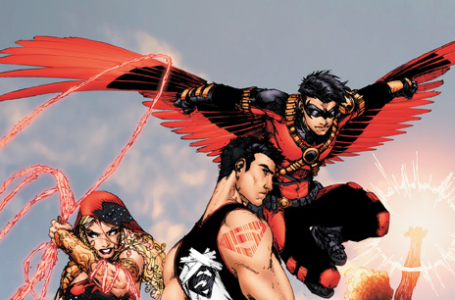
The first aspect of homosexuality and comic book characters is going to involve the Comics Code Authority, which regulated decency in comics, and in particular, homosexual depictions in comics. One of the first "examples" used to villainize homosexuality in comics involved the dubious partnership of Batman and Robin, where the leading anti-gay proponent theorized that it was a covert way of depicting a homosexual relationship between a bachelor and his "young ward".
The first openly gay superhero is debated, but most likely falls on the character Extrano, a fabulous parody of Dr. Strange (Extrano meaning strange in Spanish) from DC. Before then, you may have had some background characters who were most likely villains if they were actually prominent and homosexual (Pied Piper of DC comes to mind, though I'm not sure if he was written as gay in his initial appearance or not. Research is helpful here.)
Among other characters looped into the mantle of "first gay superhero" is the Canadian mutant character Northstar from Marvel Comics, introduced in Uncanny X-Men in 1979. Northstar did not officially come out as gay in the comics until 1992, though creator John Byrne had intended in 1983 when he was fleshing out the characters for their series Alpha Flight to make one of them gay, Northstar being his eventual character. However, because of the CCA (and then Editor-in-Chief Jim Shooter), they were not allowed to have Northstar say that he was gay (No gay characters were allowed in Marvel Comics), so Byrne had to imply that Northstar was gay. Apparently, Byrne was inspired by this after reading a Scientific American story in the 1980's that showed more of a trend toward believing sexual orientation to be genetics based and less environmentally based as previously thought.
Later writers treated Northstar with derision in some ways. A storyline had him suddenly succumb to an unknown illness, intended by writer Bill Mantlo to be AIDS, but editors forced him to change it to a magical illness, prompting another writer to say that Northstar "wasn't gay, he was just a fairy."
It was only in 1992 that the ban had lifted and Scott Lobbell penned a story where Northstar finds an abandoned baby girl in a trash can during a mission and learns that the baby has HIV. This prompts him to adopt her, name her, and come out to the public as a gay man. The baby eventually dies because of complications with HIV, but Northstar continues on, openly gay and proud.
Definitely as far as Marvel goes, Northstar is Marvel's most prominent mainstream gay character, though there are others that followed, such as the villainess Mystique, mother of Rogue and Nightcrawler, and her partner, Destiny. Though mutant terrorists, the bisexual Mystique found her deepest emotional connection with Destiny, who loved her as well. The two raised their foster daughter Rogue together, though Destiny would eventually die during a fight against Proteus leaving Mystique distraught.
In more recent years, more characters have been revealed later on in their publication histories to be LGBT and some introduced as LGBT:
- The New Mutant characters Karma, was later revealed to be a lesbian, and Rictor, a bisexual.
- The long-time friend of Rictor's, Shatterstar, was only recently introduced back into X-Men continuity by writer Peter David in X-Factor, this time finally ready and interested in a relationship with Rictor. Previously, under creator Rob Liefield, Star was described as a Spartan warrior--someone with absolutely no sexuality at all. Liefield was upset when David went against his original concept of Star, which made some news. The kiss between Rictor and Star also made headlines as Marvel's first same-sex kiss. This won a GLADD Media Award.
- The New X-Men students Anole, a gay teen who had Northstar as his role model and faculty mentor, and Bling!, a lesbian with a crush on Rogue. Anole also had an interesting publication history, as the originals toryline involved him coming out to his parents while defending his teacher Karma from their accusations, after they were to witness her kissing another woman. Anole was initially planned to be rejected by his parents and fellow outcast mutant students, and commit suicide to serve as a story about intolerance and hate, even amongst those who are persecuted themselves. The story was put on halt because of its controversial nature, and instead, Anole was rewritten to have no problems coming out to his parents or friends. His sexuality is very openly addressed in later publications, and particularly, I really enjoy the exploration of friendship and understanding written between he and gruff, straight jock-type character Rockslide, who support Anole no matter what, but is still rough around the edges in trying to show his support.
- Two of the teenage characters created and written by Allen Heinberg in Young Avengers, a series about the next line of Avengers patterned off of the Avengers, are gay and in a relationship. These are Wiccan, a mage modeled off of Thor and Scarlet Witch, and Hulkling, a shape shifting alien modeled after the Hulk and Captain Marvel. Readers suspected the relationship between the two characters early on, forcing Heinberg to address it earlier than intended. Originally, Heinberg didn't believe that Marvel would allow a real same-sex relationship, so he intended Hulkling to be later revealed to be a girl shapeshifter taking a male form. However, the editorial staff had no problem with the original, so Hulkling remained a gay male. The series garnered a GLADD Media Award.
- Brian K. Vaughn (director of X-Men: First Class) also created a series called Runaways, about a group of teens who learn that their parents are supervillains and stop them while learning about their own powers, also featured the lesbian character, Karolina Dean, who learns that she is actually an alien like her parents. She later is courted by Skrull prince named Xavin. She is turned off by him until he learns that she prefers women, a gender switch that the Skrulls (shapeshifters) are easily able to make. Their relationship continues, though Xavin occasionally faced a series of inner conflicts about which gender she truly was and if Karolina liked her only for her gender.
- In Marvel's alternate universe series of comics, the Ultimate line of comics, Ultimate Colossus and Ultimate Northstar were in a relationship together.
- A redo of The Rawhide Kid portrayed the character as being gay, a move that was controversial in its stereotypical portrayal of gay mannerisms.
------------
In DC, you also have quite a few queer characters, though I am less familiar with DC, especially with its constant reboots.
- Phantom Lad was gay in at least one incarnation.
- The son of one of the Green Lantern, Obsidian, was later revealed to be gay and in a relationship with an attorney who frequently took on superhero cases.
- The newest incarnation of the super detective, The Question, Renee Montoya is also a lesbian.
- A lot of press was devoted to the most recent character to take on the role of Batwoman: Kassandra Kaine. This press was mostly because Kain was an out lesbian. The series was widely praised.
- The villains Mala and The Brain were revealed to be gay after a storyline in which Mala, the intelligent gorilla villain, secures a robot body for the disembodied Brain, so that they can finally address their true love for one another, developed over their many years of partnership.
- The villain Pied Piper is gay.
Other titles had their share of gay characters, too. Image Comics' series The Authority featured the two leaders of a superhero team, Apollo (a similar character to Superman in power set) and Midnighter (a similar character to Batman) as openly gay men and strong leaders and fighters. The couple later adopt a baby girl, Jenny Quantum, and raise her together.
Neil Gaiman's highly praised series The Sandman from Vertigo Comics (technically part of DC) featured more down to earth, non-superhero queer characters. In A Game of You, the protagonist, Barbie, is friends with a trans character named Wanda, who protects her when she falls into a magical sleep. Wanda dies protecting Barbie, and is buried by her conservative, religious parents. They bury her under her male name as "Alvin", unable to accept that she was trans. At the end, Barbie crosses out Alvin and writes Wanda on the headstone in lipstick to honor her. The lesbian couple Foxglove (a singer) and her partner Hazel were regular side characters throughout the series, their relationship being explored after the fallout of Foxgloves girlfriend being murdered before she met Hazel, and their later decision to settle down and raise a surrogate child together.
The cult series Scott Pilgrim by Bryan Lee O'Malley also featured the prominent "cool gay roommate" Wallace Wells, inspired by O'Malley's own comic-loving gay roommate, Christopher Butcher, of Comics 212, PopImage, and PreviewsReviews. The series was adapted into a movie staring Michael Cera, with Kieran Culkin hilariously portraying the wry Wallace in the film.
Even more recently is Archie Comics, which introduced the new character Kevin Keller to Riverdale. Keller is a spunky character, accepted by the other kids, who is openly gay. A first issue of his own series depicts his coming out to his accepting parents, including his military father, and their dismay over Don't Ask, Don't Tell.
-------
The introduction of Japanese manga to the West also brought a flood of queerness into the industry. The large and popular market of "yaoi", stories about male love written and drawn mostly by women for girls/women to read moved over to the US, too. Yaoi stories focus on several cliches, such as bishounen (beautiful boys), and range in maturity from simple romantic love and cuteness between grown men or teenage school lovers to hardcore sexual, adult material.
The phenomenon of women writing same-sex male stories was also followed by a movement of gay men writing stories for gay men, called "bara" (meaning "rose" in Japanese). These feature predominantly muscular or beefy men, sometimes hairy, like the bear community, ranging from cute love stories to more often than not, hardcore sexuality.
These also line up with the growth of gay-interest superhero adult comics from the US and Europe, such as Patrick Fillion's series Naked Justice, Ghost Boy, and Deimos, or Tom Boden's hilarious, yet frank 90's story of "Max & Sven", about a young boy who falls in love with his straight best friend.
------
I'm also glad you mention Perry Moore. It was actually because the character Northstar was killed by a mind-controlled Wolverine in a 2006 storyline that Moore felt motivated to write Hero. He objected to what was essentially the posterboy of Marvel's cool division killing the most prominent Marvel gay character.
He also created a list of queer characters and how they were "mistreated" by the comics industry, similar to comic writer Gail Simone's website, Women in Refrigerators, which catalogued misogyny in comics.
This is where Moore and I differ. After going through his list, I found several of his examples to be specious and misrepresented. He essentially listed anything negative as being a grievance, when some of these things are common comic book circumstances or aren't correct at all.
For example, he cited the character Karma's storyline where she becomes possessed by an evil psychic and turned obese through his insatiable appetite as an example of character mistreatment. However, the conclusion of that storyline was that Karma fought back and eventually, after being stranded in the desert and finding a lost child that she needed to protect, returned to her original body. And even then, this storyline was long before the character was revealed to be gay.
Even Moore's original inspiration was specious. Yes, Northstar is killed by Wolverine, but in the next two issues, his body is stolen and he is revived as a villain by the evil assassin clan The Hand (a long-time enemy of Wolverine's). Wolverine's quest then becomes to rescue Northstar and hopefully rehabilitate him. In the end, Wolverine even refuses to kill Northstar, knowing he is evil, because Northstar is his long-time friend. Northstar is placed in custody to be deprogrammed of his brainwashing, though Nick Fury somberly notes that Northstar may be having trouble being deprogrammed due to a sense of betrayal at his initial murder by his good friend.
So the character's death was part of an immediate storyline, not a one-off kill as Moore portrayed it in promoting his book.
---------
I know I've vomited a ton of stuff here, but I think this Wiki page has a lot of good info and you can check out some info on gay characters and superheroes in comics:
http://en.wikipedia.org/wiki/LGBT_themes_in_comics (Review of LGBT themes and history in all sorts of genres of comics such as superhero comics, graphic novels, comic strips, and manga, such as yaoi and bara)
http://en.wikipedia.org/wiki/Category:LGBT-related_comics
http://en.wikipedia.org/wiki/Category:LGBT_superheroes
http://en.wikipedia.org/wiki/Category:LGBT_characters_in_comics
For more info on characters, you should also go to GayLeague:
http://www.gayleague.com/