The Original Gay Porn Community - Free Gay Movies and Photos, Gay Porn Site Reviews and Adult Gay Forums

  • Welcome To Just Us Boys - The World's Largest Gay Message Board Community

    In order to comply with recent US Supreme Court rulings regarding adult content, we will be making changes in the future to require that you log into your account to view adult content on the site.
    If you do not have an account, please register.
    REGISTER HERE - 100% FREE / We Will Never Sell Your Info

    PLEASE READ: To register, turn off your VPN (iPhone users- disable iCloud); you can re-enable the VPN after registration. You must maintain an active email address on your account: disposable email addresses cannot be used to register.

  • Hi Guest - Did you know?
    Hot Topics is a Safe for Work (SFW) forum.

Discussion Thread from the Funny Anti-Religious Pictures thread.

"If God himself was not able to render human nature sinless, what right had he to punish men for not being sinless?" One doesn't know whether or not that applies to the Biblical God, that's the point.

Then one ought to investigate rather than flapping lips to pretend to make a point.

Not true. The reliability of the Gospels is not universally accepted. The accounts postdate the events by decades or centuries, etc., etc.

"Centuries"? No --that's totally false.
"Decades"? A couple, at most, except for one, which is likely twice that.

Try looking up the meaning of "slur". You may not like it, but it's not insulting or derogatory to assert inaccuracies. Cartoons can be inaccurate or exaggerations to comic or other purpose.

Stop changing the point.
Using inaccuracies to make an insult is a slur. It's not humor, it's not discussion, it's a slur.
 
The point is that its writers have their own limitations and predispositions. One can't just take what they say as Gospel.

No, the point is that the Gospels are biography -- technically, the Roman genre known as "bios". That's the kind of literature they are, and that's how they have to be treated. You don't decide ahead of time how you plan to treat it, you approach it as the type of literature it is.

This is one of the big issues with the FARIP thread: a huge resistance to knowledge, facts, accuracy, honesty, and rationality. Making fun of religion has a special carve-out on JUB where no one has to face what Hot Topics is supposed to be for, discussion. It's an exception to the Code of Conduct, one the mods won't allow for anything else.
 
Religious evangelicals have been replacing the indigenous cultures and religious practices of people worldwide. These people whose old customs have been supplanted by those brought in from european heritages have been taught that the old ways are frowned upon because God of the old testament is a jealous god. Converts then go on support the new faith and shun the old.

Irrelevant -- that's afterword; it has no bearing on the documents.

Why should one trust accounts written about the old ways by those who consider the old ways heretical?

That has nothing to do with the New Testament -- they were the ones considered heretical. And they embraced the Old Testament; they didn't call it heretical.

That was what I was getting at. We should not trust the evidence of the people documenting what they percieved without question, as their outlook will always be coloured or tainted by their own beliefs or world outlook.

By that rule, all testimony in court should be thrown out: no one testifies when they don't think what they're saying is true.

What we have in the Gospels is eye-witness accounts by people who before those events would have condemned anyone holding them. They're equivalent to accounts by people who believed everything orbited the earth, who after looking through Galileo's telescope told their friends that things went around other bodies than the earth, because they'd seen them. It's a testimony of people who due to the evidence changed their worldview, telling why they changed it.
 
Then one ought to investigate rather than flapping lips to pretend to make a point.

None so blind as those who will not see. "If God himself was not able to render human nature sinless, what right had he to punish men for not being sinless?" That's a conditional statement that stands on its own. If you want, as you say, to flap your lips at if, and how, that might apply to a Biblical God, that is your prerogative. But one doesn't need to introduce your religious preconceptions. You're volunteering to do that. Not everyone comes to the station with the same baggage.

"Centuries"? No --that's totally false.
"Decades"? A couple, at most, except for one, which is likely twice that.

Witness accounts written 20 or 40 years later. No need to have any skepticism or doubt about what they evidence. Give us a break.

Stop changing the point.
Using inaccuracies to make an insult is a slur. It's not humor, it's not discussion, it's a slur.

Inaccuracies are not the same thing as slurs. It's as simple as that.
 
No, the point is that the Gospels are biography -- technically, the Roman genre known as "bios". That's the kind of literature they are, and that's how they have to be treated. You don't decide ahead of time how you plan to treat it, you approach it as the type of literature it is.

Firstly, that is one option. One can respond to it in any way one wants provided that it's expressly or implicitly clear as to what one's doing.

Secondly, if one chooses to respond, as you seem to, only on the basis of the self-contained rules of the genre, that is one valid response in terms of understanding the texts, etc. But it's only a partial response. Hence, you end up standing on your head to justify the Bible's softening on slavery, etc. The rest of a full response is to place the genre in a full historical and current moral context. And there, for many folk, the texts fall short.

I don't think one needs evidence for faith so the shortcomings of the genre and the Bible itself aren't something to get overly defensive about. If you see it as a worthy but flawed religious script, you might not need to keep jumping through so many hoops around it. Just a thought.


This is one of the big issues with the FARIP thread: a huge resistance to knowledge, facts, accuracy, honesty, and rationality. Making fun of religion has a special carve-out on JUB where no one has to face what Hot Topics is supposed to be for, discussion. It's an exception to the Code of Conduct, one the mods won't allow for anything else.

Others on this tread and I have repeatedly explained to you why that is not the case. Funny anti-religious pictures, etc. may, but need not, constitute slurs or hate speech. You seem to want to curb posters from criticizing your religious beliefs. I assume you've got it by this point that you don't get to prevent people from doing that, until and until someone actually crosses the line.
 
Irrelevant -- that's afterword; it has no bearing on the documents.


That has nothing to do with the New Testament -- they were the ones considered heretical. And they embraced the Old Testament; they didn't call it heretical.


By that rule, all testimony in court should be thrown out: no one testifies when they don't think what they're saying is true.

What we have in the Gospels is eye-witness accounts by people who before those events would have condemned anyone holding them. They're equivalent to accounts by people who believed everything orbited the earth, who after looking through Galileo's telescope told their friends that things went around other bodies than the earth, because they'd seen them. It's a testimony of people who due to the evidence changed their worldview, telling why they changed it.

I didn't post the comments, to which you're replying. However, I'm happy to respond. Lots of people testify when they know what they're saying isn't true or they may just be mistaken. Decades old eye witness testimony kinda isn't really eye witness testimony or it may be stale or faulty. All sources have to be tested to determine their objectivity. And so on and so forth.
 
Firstly, that is one option. One can respond to it in any way one wants provided that it's expressly or implicitly clear as to what one's doing.

Secondly, if one chooses to respond, as you seem to, only on the basis of the self-contained rules of the genre, that is one valid response in terms of understanding the texts, etc. But it's only a partial response. Hence, you end up standing on your head to justify the Bible's softening on slavery, etc. The rest of a full response is to place the genre in a full historical and current moral context. And there, for many folk, the texts fall short.

I don't think one needs evidence for faith so the shortcomings of the genre and the Bible itself aren't something to get overly defensive about. If you see it as a worthy but flawed religious script, you might not need to keep jumping through so many hoops around it. Just a thought.

Placing any ancient literature in a "current moral context" is to determine ahead of time to fail to understand the literature. That's just basic scholarship.

But besides that, if you look at the Bible and then at the current moral context, the conclusion is that human society is still far short of the standard of the Old Testament, let alone the New. We struggle to live up to the lesser admonitions of the Prophets, which were given to explain what the "Law" (Torah) was about.

As for historical context, of course -- but a great number of the images in the FARIP thread refuse to even do that: they approach it as though it was written last Tuesday inside their worldview. If you want to be as ignorant as a fundamentalist, fine, but then the real joke is on you for doing so, because (as with the reductio ad absurdam that was claimed) you're actually making fun of yourself.

Others on this tread and I have repeatedly explained to you why that is not the case. Funny anti-religious pictures, etc. may, but need not, constitute slurs or hate speech. You seem to want to curb posters from criticizing your religious beliefs. I assume you've got it by this point that you don't get to prevent people from doing that, until and until someone actually crosses the line.

Images used to cross the line constantly -- and some still do.

That you can say "You seem to want to curb posters from criticizing your religious beliefs" tells me you're not actually paying attention. I just want people to be accurate and rational.
 
worth reposting

tumblr_oheowdYNjj1soe7o9o1_500.jpg

A, the fallacy of assuming that the way YOU would do things is the only way to do things.

If you're trying to show the intellectual failings of the FARIP thread, then this was definitely worth reposting.
 
I didn't post the comments, to which you're replying. However, I'm happy to respond. Lots of people testify when they know what they're saying isn't true or they may just be mistaken. Decades old eye witness testimony kinda isn't really eye witness testimony or it may be stale or faulty. All sources have to be tested to determine their objectivity. And so on and so forth.

Okay, that's a glitch I haven't seen in a long time here! I just used the quote function and then subdivided. Weird.

"Decades old eyewitness testimony" isn't an accurate description, because it pretends that they for some reason after all those years decided to try to remember. It's eyewitness testimony that had been communicated and known by hundreds or more fr those decades, and would have been pounced on if incorrect -- as the church pounced on many so-called Gospels because people knew they were false. The biography in the Gospels is the written version of a self-correcting oral tradition in a culture that not merely valued but demanded getting the account the same every time.

That's the problem with the old "telephone game" canard about the Bible: it's essentially lying about the situation, probably due to ot understanding it. The game would only work if you told the same thing to several dozen people and made them recite it back to you until they got it right, and then they each passed it on to someone else, and any of those people could check back with any of the original dozens to check any time they weren't sure about something. Remember that the Gospel writers were inheritors of a culture where if a page of a holy writing had one mistake, it was burned and done over -- a culture that managed to pass the Old Testament virtually unchanged for over a thousand years, as verified by the Dead Sea Scroll texts -- and they were writing for such a culture as well, with lots of people still around who would know if they got it wrong.
 

If directed toward the Bible, this remains a lie.

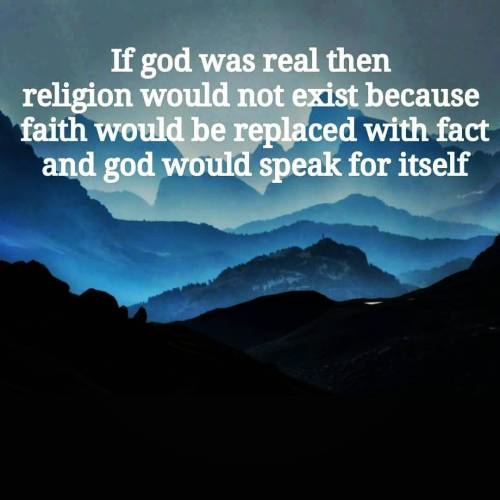
For that matter, in everyday life it's a lie: faith is trust, and people generally extend trust on the basis of evidence. So the assertion is actually fallacious, because it relies on a special definition of faith that isn't the one used by those being criticized.
 
Placing any ancient literature in a "current moral context" is to determine ahead of time to fail to understand the literature. That's just basic scholarship.

Nonsense. I never said placing the text in a current moral context precedes an understanding of the text in its own terms. Something may be the most wonderful thing ever written in ancient times but, if it promotes, say, human sacrifice, it's morally bereft. You never seem to get to stage two.

But besides that, if you look at the Bible and then at the current moral context, the conclusion is that human society is still far short of the standard of the Old Testament, let alone the New. We struggle to live up to the lesser admonitions of the Prophets, which were given to explain what the "Law" (Torah) was about.

So what? The Old Testament has gaping moral flaws.

As for historical context, of course -- but a great number of the images in the FARIP thread refuse to even do that: they approach it as though it was written last Tuesday inside their worldview. If you want to be as ignorant as a fundamentalist, fine, but then the real joke is on you for doing so, because (as with the reductio ad absurdam that was claimed) you're actually making fun of yourself.

All of those issues, even if true, flow into the attempts at being funny. Making fun of oneself if part of the genre.

Images used to cross the line constantly -- and some still do.

That you can say "You seem to want to curb posters from criticizing your religious beliefs" tells me you're not actually paying attention. I just want people to be accurate and rational.

You're on a Hot Topics forum on a porn site. You might try developing a sense of humor.
 
Okay, that's a glitch I haven't seen in a long time here! I just used the quote function and then subdivided. Weird.

"Decades old eyewitness testimony" isn't an accurate description, because it pretends that they for some reason after all those years decided to try to remember. It's eyewitness testimony that had been communicated and known by hundreds or more fr those decades, and would have been pounced on if incorrect -- as the church pounced on many so-called Gospels because people knew they were false. The biography in the Gospels is the written version of a self-correcting oral tradition in a culture that not merely valued but demanded getting the account the same every time.

That's the problem with the old "telephone game" canard about the Bible: it's essentially lying about the situation, probably due to ot understanding it. The game would only work if you told the same thing to several dozen people and made them recite it back to you until they got it right, and then they each passed it on to someone else, and any of those people could check back with any of the original dozens to check any time they weren't sure about something. Remember that the Gospel writers were inheritors of a culture where if a page of a holy writing had one mistake, it was burned and done over -- a culture that managed to pass the Old Testament virtually unchanged for over a thousand years, as verified by the Dead Sea Scroll texts -- and they were writing for such a culture as well, with lots of people still around who would know if they got it wrong.

No need to try to teach your grandmother to suck eggs. Most people were illiterate. Not all texts survived or permitted into the canon. Even if there is a sustainable chain of evidence, the evidence itself may be mistaken or manipulated, etc., etc. Who knows whether King Arthur really existed in the way he is portrayed in the surviving stories? You're reaching for a certainty that isn't there, absent a preconception that it must be. Faith.
 
Nonsense. I never said placing the text in a current moral context precedes an understanding of the text in its own terms. Something may be the most wonderful thing ever written in ancient times but, if it promotes, say, human sacrifice, it's morally bereft. You never seem to get to stage two.

Evaluating the text by modern standards is generally a fundamentalist-style cop-out, especially when it's a text with an arc toward improvement. The problem, though, in the FARIP thread is that generally the step of understanding the ancient text at all is skipped, so all that gets examined is the individual's preconceptions and prejudices.

So what? The Old Testament has gaping moral flaws.

No claims to that hold up, unless you're talking about the bad examples that are given -- but then those aren't flaws because they're given as bad examples.

All of those issues, even if true, flow into the attempts at being funny. Making fun of oneself if part of the genre.


You're on a Hot Topics forum on a porn site. You might try developing a sense of humor.

Any sense of humor that includes insulting others without basis is not a civilized one --it belongs in the trash bin of history. It's the sort of thing relied on by demagogues inciting unthinking masses.
 
If directed toward the Bible, this remains a lie.

For that matter, in everyday life it's a lie: faith is trust, and people generally extend trust on the basis of evidence. So the assertion is actually fallacious, because it relies on a special definition of faith that isn't the one used by those being criticized.

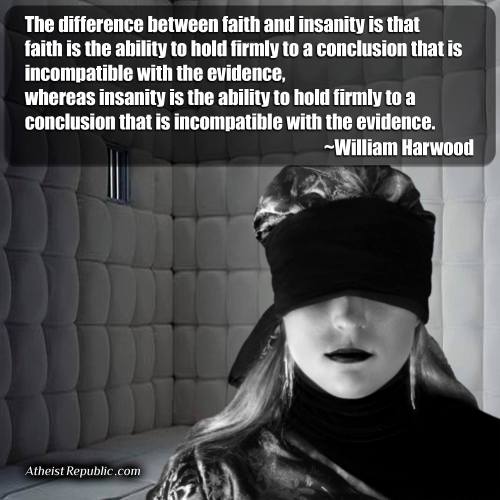
A good example of pounding one's own tub. Many Christians don't agree with you that faith is reliant on evidence. People extend trust based on evidence and also without any evidence. The illustration draws a valid comparison between evidence free faith and insane thinking. Many Biblical characters and saints were crazy.
 
No need to try to teach your grandmother to suck eggs. Most people were illiterate. Not all texts survived or permitted into the canon. Even if there is a sustainable chain of evidence, the evidence itself may be mistaken or manipulated, etc., etc. Who knows whether King Arthur really existed in the way he is portrayed in the surviving stories? You're reaching for a certainty that isn't there, absent a preconception that it must be. Faith.

Yes, people were illiterate -- and that's one of the facts that stands in the corner of the reliability of the Gospels: people knew they couldn't read or write, so they depended on everyone who told a story to get it right, and they learned the stories well enough to call out anyone who got it wrong. Texts that didn't measure up were excluded from being read in the churches, which is why they didn't make it into the canon. False Pauline letters vanished pretty quickly, because the churches were full of people who knew Paul -- and his actual letters were being read in the churches during his life.

No -- I am describing the certainty that arises by treating the texts according to standard principles of historical analysis. You're putting the cart before the horse.

It's no different than when someone here dismissed the author of Cold Case Christianity as unobjective because he became a Christian due to applying modern rules of evidence. If that is to be followed, then no one who has been convinced of something can be trusted, because they obviously believe that thing.
 
A good example of pounding one's own tub. Many Christians don't agree with you that faith is reliant on evidence. People extend trust based on evidence and also without any evidence. The illustration draws a valid comparison between evidence free faith and insane thinking. Many Biblical characters and saints were crazy.

The Bible's definition of faith requires evidence -- Paul says so, the Prophets say so.
 
Back
Top