The succession of the British crown is regulated by the Act of Settlement (1701) and Royal Marriages Act (1772). Elizabeth's father was the last king, George VI. A person is always immediately followed in the succession by his or her own legitimate descendants. Birth order and gender matter. (Older sons before younger sons) Sons (and their sons) come before daughters and their children.
When George VI died in 1952 - he only had two daughters (Elizabeth and Margaret), so, because Elizabeth was the oldest, she became Queen (good thing too considering Princess Margaret's lifestyle!). Because Prince Phillip was not the son of George VI, he was not eligible in THAT particular line of succession - however, he is a distant cousin of the Queen's through their common ancestor - Queen Victoria - and so is 495th in the line of Succession, through his mother Princess Alice of Battenburg. The current line of Succession is calculated out 1786 places.
The Late Queen Mother, was the Queen Mother because she was the legitimate wife of the former King, George VI - and had been crowed Queen at the time of his coronation.
And, as for Phillip being "just a little old 'Prince of England' - being a "Royal Duke", an HRH and a "Prince of the United Kingdom" is one of the smallest, rarest clubs in the world. There are currently only six members. Eight if you count Harry and Will, who are not Royal Dukes - (nor technically is Prince Andrew, who is an Earl)
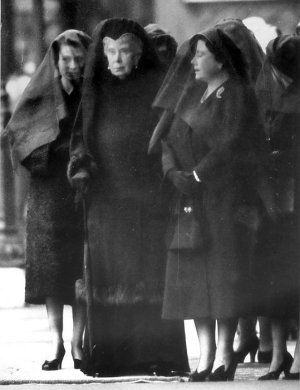
The photo I've attached is from the funeral of George VI - and shows, possibly the only time in history - where there were three legitimate Queens of England - although only Elizabeth II is the Sovereign - and outranks both the others.