The Original Gay Porn Community - Free Gay Movies and Photos, Gay Porn Site Reviews and Adult Gay Forums

  • Welcome To Just Us Boys - The World's Largest Gay Message Board Community

    In order to comply with recent US Supreme Court rulings regarding adult content, we will be making changes in the future to require that you log into your account to view adult content on the site.
    If you do not have an account, please register.
    REGISTER HERE - 100% FREE / We Will Never Sell Your Info

    PLEASE READ: To register, turn off your VPN (iPhone users- disable iCloud); you can re-enable the VPN after registration. You must maintain an active email address on your account: disposable email addresses cannot be used to register.

U.S. Economy and its Mess

The thing is...the broligarchs and their Ai circle jerk think they are the economy.

And of course, as I mentioned above, they are betting in both directions and know that no matter what, they get to pick up all the spoils at bargain basement prices when the other investors sell out in the panic to come.
 

bafkreiafxn4n6ngodlbjee4x75y3jtzmrueweq7rhenek4oalphdxrmufi
 
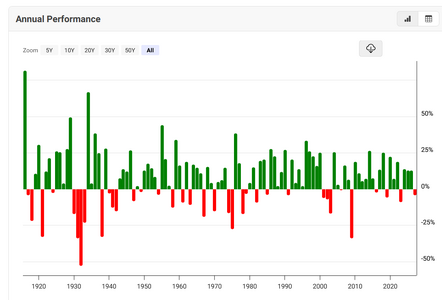
^^ Just commenting on the stock market number which seems to fly in the face of the decades long republican claim that democrats pass too many regulations and thereby strangle economic growth. Instead what that number appears to say is that businesses just hate being regulated, and who can blame them none of us like being told what to do. It also appears when those same businesses are deregulated under the republicans and have more room to make decisions independently and without regulatory guidance they make bad decisions.
 
^^ Just commenting on the stock market number which seems to fly in the face of the decades long republican claim that democrats pass too many regulations and thereby strangle economic growth. Instead what that number appears to say is that businesses just hate being regulated, and who can blame them none of us like being told what to do. It also appears when those same businesses are deregulated under the republicans and have more room to make decisions independently and without regulatory guidance they make bad decisions.
Honestly, it has little to do with who is in charge in the White House. It's all a matter of timing. There have been economic crises that precede the beginning of Democratic Administrations since 1980. When the economy recedes, it can only go up. The response probably has more to do with which party is in power in Congress- Democrats are quicker to find government solutions to resolve economic recessions before they become a crisis.

The argument that Democrats are more likely to pass regulations like Dodd-Frank that are intended to stave off a crisis before it happens might also be valid but the counter-argument is that deregulation often stimulates the economy, leading to bubbles that eventually collapse.

The big crisis of the past 25 years, the 2008 financial crisis, was the result of actions from both Republicans and Democrats.

Dow performance since 1920:
1774041192797.png
 
Honestly, it has little to do with who is in charge in the White House. It's all a matter of timing. There have been economic crises that precede the beginning of Democratic Administrations since 1980. When the economy recedes, it can only go up. The response probably has more to do with which party is in power in Congress- Democrats are quicker to find government solutions to resolve economic recessions before they become a crisis.

The argument that Democrats are more likely to pass regulations like Dodd-Frank that are intended to stave off a crisis before it happens might also be valid but the counter-argument is that deregulation often stimulates the economy, leading to bubbles that eventually collapse.

The big crisis of the past 25 years, the 2008 financial crisis, was the result of actions from both Republicans and Democrats.

Dow performance since 1920:
View attachment 3601558

Timing might explain a 60-40 ratio but this ratio is almost 10-1 so there’s has to be more to it than timing. And even when timing matters what you’re actually saying is that taking office after bad economic times sets you up for a bounce back and growth which I concede is true but don’t ignore the bad economy conditions that occurred while a republican was president.
I don’t know why this is so but if I had to guess I’d say it has something to do with, to steal a phrase, a rules based order as opposed to chaos. People may like the idea of total freedom and no rules but they actually thrive when there are rules and expectations can be made with confidence. The Wild West was neither a economic success nor a cultural one until it stopped being wild.
 
^ One of the differences is linked to the Dems repairing the economy after the GQP break it and the attempts to rein in the out of control deficit spending that the repubs should be known for. And that goes to your point of rules and stability in the markets and focus on consumers.

Right now, the market is high on its own supply of Ai fumes. So the tech crash will destroy all the buildings on Main Street as well as Wall Street.
 
Timing might explain a 60-40 ratio but this ratio is almost 10-1 so there’s has to be more to it than timing. And even when timing matters what you’re actually saying is that taking office after bad economic times sets you up for a bounce back and growth which I concede is true but don’t ignore the bad economy conditions that occurred while a republican was president.
^ One of the differences is linked to the Dems repairing the economy after the GQP break it and the attempts to rein in the out of control deficit spending that the repubs should be known for. And that goes to your point of rules and stability in the markets and focus on consumers.

I've had this argument with friends over the years. For example, everyone agrees that the economy was doing well during the Clinton years and that the budget deficit was better controlled. A Democrat will say, "It's because of Clinton's policies". A Republican will say, "It's because Bush raised income tax rates which gave the Republican Congress more revenue to balance the budget".

What I did clearly see in 2008 was that far left friends were saying, "Let it burn. Don't bail them out!". Far right friends were saying, "The government shouldn't pick winners and losers. Don't bail them out!". Then when the global economy was on the verge of collapse, then everyone did a 180 on the bailout. A few years later, the far left was telling the far right, "You made us wait too long! The bailout wasn't big enough". The far right was telling the far left, "It's because of your liberal housing policies that all of his happened.". Similar arguments are still going on about COVID-19.

One of the problems is that a change made today might not have an effect until years later. The economy is complicated. Cause and effect aren't always straightforward. One thing is clear- both sides want to spend and spend and spend but only one side ever talks about the revenue (read: tax) side of the equation.
 
I've had this argument with friends over the years. For example, everyone agrees that the economy was doing well during the Clinton years and that the budget deficit was better controlled. A Democrat will say, "It's because of Clinton's policies". A Republican will say, "It's because Bush raised income tax rates which gave the Republican Congress more revenue to balance the budget".
I have to disagree on this point, name me a republican who will say raising taxes will help reduce the deficit. Since 1980 republican orthodoxy on taxes has been increasing them reduces economic growth and tax revenues while cutting them will be paid for via increased economic growth, no matter that the actual experience of cutting taxes has lead to consistently higher deficits. It’s more likely a republican in the 1990s would have explained the success of the Clinton economy by pointing out that after 1994 the republicans controlled the House for the rest of the decade and they were the ones who kept Clinton in line concerning spending.
 
I have to disagree on this point, name me a republican who will say raising taxes will help reduce the deficit. Since 1980 republican orthodoxy on taxes has been increasing them reduces economic growth and tax revenues while cutting them will be paid for via increased economic growth, no matter that the actual experience of cutting taxes has lead to consistently higher deficits. It’s more likely a republican in the 1990s would have explained the success of the Clinton economy by pointing out that after 1994 the republicans controlled the House for the rest of the decade and they were the ones who kept Clinton in line concerning spending.
The Republicans in my social circle have college degrees and took math classes.

They're also older and are from the generation that worried about deficit spending and the danger of having foreign countries holding millions (later billions and now trillions) of American debt. While their motivation might be to deny Bill Clinton any due credit for anything, they also lived at a time when there were estate taxes on large estates, and when dividends were taxed both as corporate earnings and as regular income when received by investors.

The Republicans that you are talking about are the likely the post George W Bush Republicans who passed tax cuts that blew up the deficit, indulged in foreign wars that were never paid for and who passed a Medicare expansion law that was not funded. These Republicans are the same Republicans who want $1.00 of government services but expect to pay $.75 in taxes to pay for it.
 
The Republicans in my social circle have college degrees and took math classes.

They're also older and are from the generation that worried about deficit spending and the danger of having foreign countries holding millions (later billions and now trillions) of American debt. While their motivation might be to deny Bill Clinton any due credit for anything, they also lived at a time when there were estate taxes on large estates, and when dividends were taxed both as corporate earnings and as regular income when received by investors.

The Republicans that you are talking about are the likely the post George W Bush Republicans who passed tax cuts that blew up the deficit, indulged in foreign wars that were never paid for and who passed a Medicare expansion law that was not funded. These Republicans are the same Republicans who want $1.00 of government services but expect to pay $.75 in taxes to pay for it.
I wasn’t talking about anyone in your social circle, I was talking about congressional republicans whose math skills I don’t question but whose orthodoxy I do. No need to go back to the Bush yrs, today which republican in congress believes, nah, will stipulate that higher taxes will result in lower deficits?
And btw Obama’s healthcare plan included no new taxes on working Americans, in DC most who serve believe in a free lunch no matter their party affiliation.
 
I wasn’t talking about anyone in your social circle, I was talking about congressional republicans whose math skills I don’t question but whose orthodoxy I do. No need to go back to the Bush yrs, today which republican in congress believes, nah, will stipulate that higher taxes will result in lower deficits?
Ultimately, the underlying truth is that Republicans in Congress (and the White House for that matter) aren't conservatives operating in a conceptual framework. They elected a demagogue reality star with no political philosophy with a long history of business failures. One of the first things that Trump and his MAGA movement did was run off most of deficit hawks and old style conservative Republicans. I couldn't tell you what Republicans in Congress believe, other than that they will do or say whatever gets them re-elected, or what their cult-leader's operation in the White House tells them to do or say.


And btw Obama’s healthcare plan included no new taxes on working Americans, in DC most who serve believe in a free lunch no matter their party affiliation.
Incorrect. The ACA, as originally passed, was budget neutral, which meant that between increased tax revenue and cost reductions, it did not increase the deficit. Since then it has been tinkered with and the insurance premiums on private plans has ballooned, so it is no longer budget neutral.

The individual mandate came with a tax penalty for those who did not participate in obtaining coverage after age 26. The Republicans repealed that tax during the last Trump Administration. There was also a tax on health insurance plans that did not comply with ACA requirements or where considered excessive ("Cadillac plans").

There were also taxes on medical devices, pharmaceutical companies and other vendors who benefited from governmental payments.

There's two components of Obama's healthcare plan: the private individual market and Medicaid expansion. Medicaid is funded out of State budgets with Federal subsidies. The big problem area is the individual market; the individual market, like Medicare Advantage, is a expanding the deficit. Both programs are a revenue transfer from taxpayers to the private insurance conglomerates who claim that they're losing money on the individual market but whose P&L statements have never been better.
 
Incorrect. The ACA, as originally passed, was budget neutral, which meant that between increased tax revenue and cost reductions, it did not increase the deficit. Since then it has been tinkered with and the insurance premiums on private plans has ballooned, so it is no longer budget neutral.
I didn’t say the ACA increased the deficit when passed, only that no taxes were raised on taxpayers, but you are correct that some other taxes were raised on certain businesses who were going to benefit form attracting more customers.
 
I didn’t say the ACA increased the deficit when passed, only that no taxes were raised on taxpayers, but you are correct that some other taxes were raised on certain businesses who were going to benefit form attracting more customers.
The individual mandate was an important piece of the legislation. The amount was nominal- less that $400 per year, typically but it provided an incentive for people to obtain ACA individual coverage, if they didn't qualify for Medicaid. This piece is what the Republicans targeted- both in a SCOTUS case (where SCOTUS ruled that these were taxes) and later when they got into power in 2017 by legislation.

I cannot tell you how many uninsured people in their 20s who do not have health insurance are unaware that they can typically get an ACA plan for less than $300 per month. Often they pay nothing because their income is so low. If the individual mandate were still in place, it would be more likely to get their attention.
 
Back
Top